Shut out that Moon


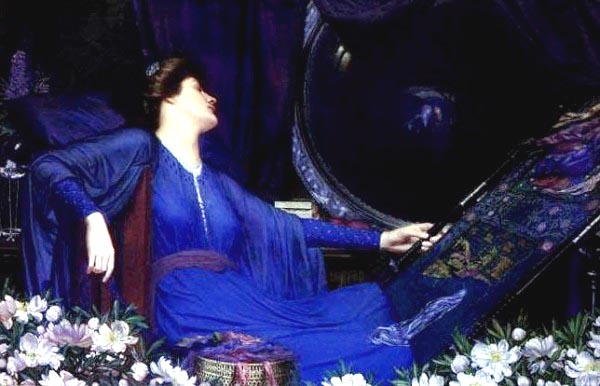
Close up the casement, draw the blind,
Shut out that stealing moon,
She wears too much the guise she wore
Before our lutes were strewn
With years-deep dust, and names we read
On a white stone were hewn.

Step not out on the dew-dashed lawn
To view the Lady's Chair,
Immense Orion's glittering form,
The Less and Greater Bear:
Stay in; to such sights we were drawn
When faded ones were fair.

Brush not the bough for midnight scents
That come forth lingeringly,
And wake the same sweet sentiments
They breathed to you and me
When living seemed a laugh, and love
All it was said to be.

Within the common lamp-lit room
Prison my eyes and thought;
Let dingy details crudely loom,
Mechanic speech be wrought:
Too fragrant was Life's early bloom,
Too tart the fruit it brought!

1904.
 Posted by Picasa

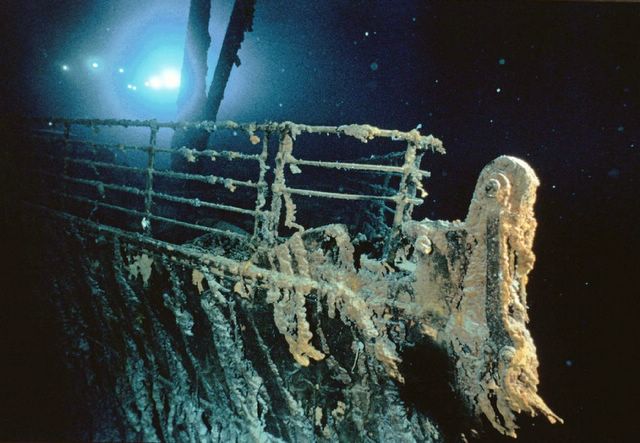
The Convergence of the Twain


(Lines on the loss of the "Titanic")

I

In a solitude of the sea
Deep from human vanity,
And the Pride of Life that planned her, stilly couches she.

II

Steel chambers, late the pyres
Of her salamandrine fires,
Cold currents thrid, and turn to rhythmic tidal lyres.

III

Over the mirrors meant
To glass the opulent
The sea-worm crawls--grotesque, slimed, dumb, indifferent.

IV

Jewels in joy designed
To ravish the sensuous mind
Lie lightless, all their sparkles bleared and black and blind.

V

Dim moon-eyed fishes near
Gaze at the gilded gear
And query: "What does this vaingloriousness down here?" . . .

VI

Well: while was fashioning
This creature of cleaving wing,
The Immanent Will that stirs and urges everything

VII

Prepared a sinister mate
For her--so gaily great -
A Shape of Ice, for the time far and dissociate.

VIII

And as the smart ship grew
In stature, grace, and hue,
In shadowy silent distance grew the Iceberg too.

IX

Alien they seemed to be:
No mortal eye could see
The intimate welding of their later history,

X

Or sign that they were bent
By paths coincident
On being anon twin halves of one august event,

XI

Till the Spinner of the Years
Said "Now!" And each one hears,
And consummation comes, and jars two hemispheres.
 Posted by Picasa

The Dolls


"Whenever you dress me dolls, mammy,
Why do you dress them so,
And make them gallant soldiers,
When never a one I know;
And not as gentle ladies
With frills and frocks and curls,
As people dress the dollies
Of other little girls?"

Ah--why did she not answer:-
"Because your mammy's heed
Is always gallant soldiers,
As well may be, indeed.
One of them was your daddy,
His name I must not tell;
He's not the dad who lives here,
But one I love too well."
 Posted by Picasa

Her Song


I sang that song on Sunday,
To witch an idle while,
I sang that song on Monday,
As fittest to beguile;
I sang it as the year outwore,
And the new slid in;
I thought not what might shape before
Another would begin.

I sang that song in summer,
All unforeknowingly,
To him as a new-comer
From regions strange to me:
I sang it when in afteryears
The shades stretched out,
And paths were faint; and flocking fears
Brought cup-eyed care and doubt.

Sings he that song on Sundays
In some dim land afar,
On Saturdays, or Mondays,
As when the evening star
Glimpsed in upon his bending face
And my hanging hair,
And time untouched me with a trace
Of soul-smart or despair?
 Posted by Picasa

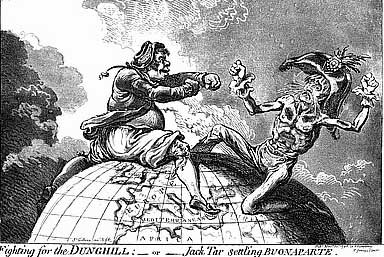
The Sergeant's Song (1803)


When Lawyers strive to heal a breach,
And Parsons practise what they preach;
Then Little Boney he'll pounce down,
And march his men on London town!
Rollicum-rorum, tol-lol-lorum,
Rollicum-rorum, tol-lol-lay!

When Justices hold equal scales,
And Rogues are only found in jails;
Then Little Boney he'll pounce down,
And march his men on London town!
Rollicum-rorum, &c.

When Rich Men find their wealth a curse,
And fill therewith the Poor Man's purse;
Then Little Boney he'll pounce down,
And march his men on London town!
Rollicum-rorum, &c.

When Husbands with their Wives agree,
And Maids won't wed from modesty;
Then Little Boney he'll pounce down,
And march his men on London town!
Rollicum-rorum, tol-tol-lorum,
Rollicum-rorum, tol-lol-lay!

1878.

Published in "The Trumpet-Major," 1880.
 Posted by Picasa

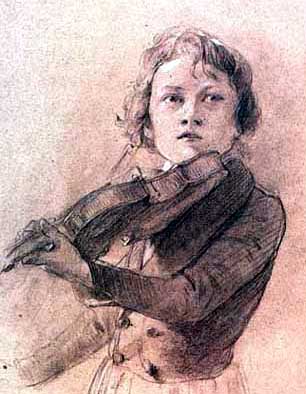
At the Railway Station, Upway


"There is not much that I can do,
For I've no money that's quite my own!"
Spoke up the pitying child -
A little boy with a violin
At the station before the train came in, -
"But I can play my fiddle to you,
And a nice one 'tis, and good in tone!"

The man in the handcuffs smiled;
The constable looked, and he smiled, too,
As the fiddle began to twang;
And the man in the handcuffs suddenly sang
Uproariously:
"This life so free
Is the thing for me!"
And the constable smiled, and said no word,
As if unconscious of what he heard;
And so they went on till the train came in -
The convict, and boy with the violin.

 Posted by Picasa

Between Us Now

Between us now and here -
Two thrown together
Who are not wont to wear
Life's flushest feather -
Who see the scenes slide past,
The daytimes dimming fast,
Let there be truth at last,
Even if despair.

So thoroughly and long
Have you now known me,
So real in faith and strong
Have I now shown me,
That nothing needs disguise
Further in any wise,
Or asks or justifies
A guarded tongue.

Face unto face, then, say,
Eyes mine own meeting,
Is your heart far away,
Or with mine beating?
When false things are brought low,
And swift things have grown slow,
Feigning like froth shall go,
Faith be for aye.

A Wet Night


I pace along, the rain-shafts riddling me,
Mile after mile out by the moorland way,
And up the hill, and through the ewe-leaze gray
Into the lane, and round the corner tree;

Where, as my clothing clams me, mire-bestarred,
And the enfeebled light dies out of day,
Leaving the liquid shades to reign, I say,
"This is a hardship to be calendared!"

Yet sires of mine now perished and forgot,
When worse beset, ere roads were shapen here,
And night and storm were foes indeed to fear,
Times numberless have trudged across this spot
In sturdy muteness on their strenuous lot,
And taking all such toils as trifles mere.

 Posted by Picasa

Weathers


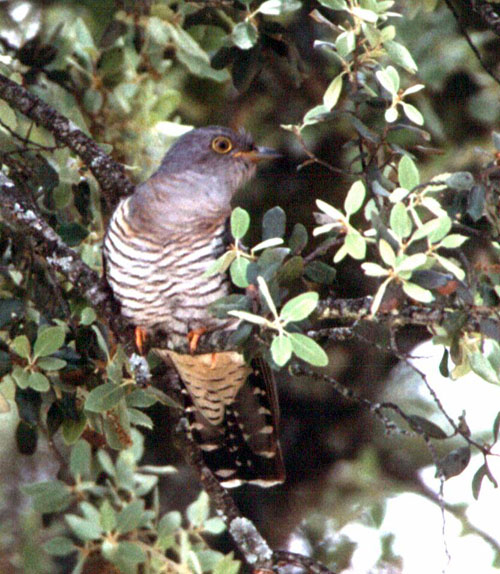
This is the weather the cuckoo likes,
And so do I;
When showers betumble the chestnut spikes,
And nestlings fly:
And the little brown nightingale bills his best,
And they sit outside at "The Travellers' Rest,"
And maids come forth sprig-muslin drest,
And citizens dream of the south and west,
And so do I.

II

This is the weather the shepherd shuns,
And so do I;
When beeches drip in browns and duns,
And thresh, and ply;
And hill-hid tides throb, throe on throe,
And meadow rivulets overflow,
And drops on gate-bars hang in a row,
And rooks in families homeward go,
And so do I.
 Posted by Picasa

The Riddle


[The Beeny Sisters]

I

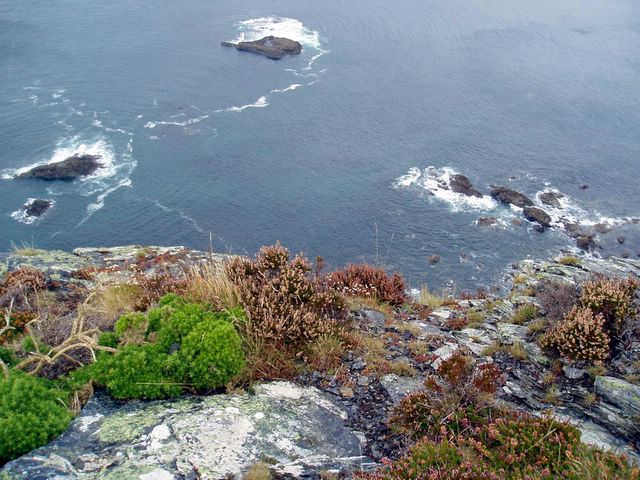
Stretching eyes west
Over the sea,
Wind foul or fair,
Always stood she
Prospect-impressed;
Solely out there
Did her gaze rest,
Never elsewhere
Seemed charm to be.

II

Always eyes east
Ponders she now -
As in devotion -
Hills of blank brow
Where no waves plough.
Never the least
Room for emotion
Drawn from the ocean
Does she allow.
 Posted by Picasa

A Confession to a Friend in Trouble


Your troubles shrink not, though I feel them less
Here, far away, than when I tarried near;
I even smile old smiles--with listlessness -
Yet smiles they are, not ghastly mockeries mere.

A thought too strange to house within my brain
Haunting its outer precincts I discern:
- That I will not show zeal again to learn
Your griefs, and sharing them, renew my pain . . .

It goes, like murky bird or buccaneer
That shapes its lawless figure on the main,
And each new impulse tends to make outflee
The unseemly instinct that had lodgment here;
Yet, comrade old, can bitterer knowledge be
Than that, though banned, such instinct was in me!

1866.
 Posted by Picasa

The West-of-Wessex girl


(Plymouth Hoe at the turn of the 20th century)

A very West-of-Wessex girl,
As blithe as blithe could be,
Was once well-known to me,
And she would laud her native town,
And hope and hope that we
Might sometime study up and down
Its charms in company.

But never I squired my Wessex girl
In jaunts to Hoe or street
When hearts were high in beat,
Nor saw her in the marbled ways
Where market-people meet
That in her bounding early days
Were friendly with her feet.

Yet now my West-of-Wessex girl,
When midnight hammers slow
From Andrew's, blow by blow,
As phantom draws me by the hand
To the place--Plymouth Hoe--
Where side by side in life, as planned,
We never were to go!

Begun in Plymouth, March 1913.
 Posted by Picasa

Tess's Lament


V

How gay we looked that day we wed,
That day we wed!
"May joy be with ye!" all o'm said
A standing by the durn.
I wonder what they say o's now,
And if they know my lot; and how
She feels who milks my favourite cow,
And takes my place at churn!

VI

It wears me out to think of it,
To think of it;
I cannot bear my fate as writ,
I'd have my life unbe;
Would turn my memory to a blot,
Make every relic of me rot,
My doings be as they were not,
And what they've brought to me!

(end)
 Posted by Picasa

Tess's Lament


III

And now he's gone; and now he's gone; . . .
And now he's gone!
The flowers we potted p'rhaps are thrown
To rot upon the farm.
And where we had our supper-fire
May now grow nettle, dock, and briar,
And all the place be mould and mire
So cozy once and warm.

IV

And it was I who did it all,
Who did it all;
'Twas I who made the blow to fall
On him who thought no guile.
Well, it is finished--past, and he
Has left me to my misery,
And I must take my Cross on me
For wronging him awhile.
(tbc) Posted by Picasa

Tess's Lament


I

I would that folk forgot me quite,
Forgot me quite!
I would that I could shrink from sight,
And no more see the sun.
Would it were time to say farewell,
To claim my nook, to need my knell,
Time for them all to stand and tell
Of my day's work as done.

II

Ah! dairy where I lived so long,
I lived so long;
Where I would rise up stanch and strong,
And lie down hopefully.
'Twas there within the chimney-seat
He watched me to the clock's slow beat -
Loved me, and learnt to call me sweet,
And whispered words to me.
 Posted by Picasa

In a Wood


See "THE WOODLANDERS"

Pale beech and pine-tree blue,
Set in one clay,
Bough to bough cannot you
Bide out your day?
When the rains skim and skip,
Why mar sweet comradeship,
Blighting with poison-drip
Neighbourly spray?

Heart-halt and spirit-lame,
City-opprest,
Unto this wood I came
As to a nest;
Dreaming that sylvan peace
Offered the harrowed ease--
Nature a soft release
From men's unrest.

But, having entered in,
Great growths and small
Show them to men akin -
Combatants all!
Sycamore shoulders oak,
Bines the slim sapling yoke,
Ivy-spun halters choke
Elms stout and tall.

Touches from ash, O wych,
Sting you like scorn!
You, too, brave hollies, twitch
Sidelong from thorn.
Even the rank poplars bear
Illy a rival's air,
Cankering in black despair
If overborne.

Since, then, no grace I find
Taught me of trees,
Turn I back to my kind,
Worthy as these.
There at least smiles abound,
There discourse trills around,
There, now and then, are found
Life-loyalties.

1887: 1896.
 Posted by Picasa

Paths of Former Time


No; no;
It must not be so:
They are the ways we do not go.

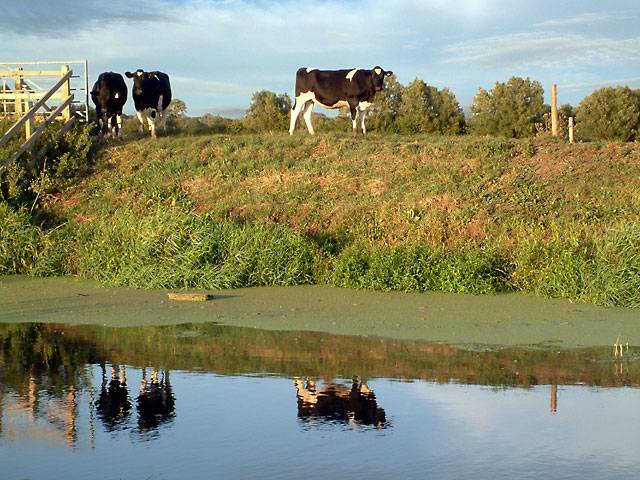
Still chew
The kine, and moo
In the meadows we used to wander through;

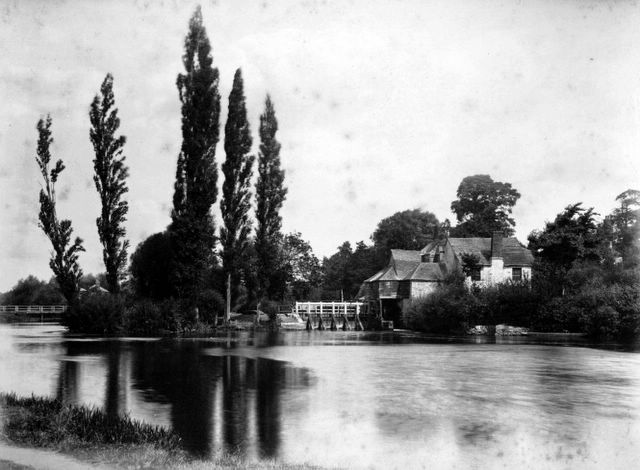
Still purl
The rivulets and curl
Towards the weirs with a musical swirl;

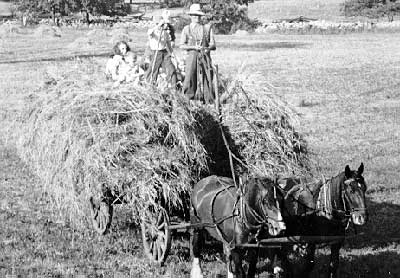
Haymakers
As in former years
Rake rolls into heaps that the pitchfork rears;

Wheels crack
On the turfy track
The waggon pursues with its toppling pack.

"Why then shun -
Since summer's not done -
All this because of the lack of one?"

Had you been
Sharer of that scene
You would not ask while it bites in keen

1913.
 Posted by Picasa

I Sometimes Think (For F. E. H.)


I sometimes think as here I sit
Of things I have done,
Which seemed in doing not unfit
To face the sun:
Yet never a soul has paused a whit
On such - not one.

There was that eager strenuous press
To sow good seed;
There was that saving from distress
In the nick of need;
There were those words in the wilderness:
Who cared to heed?

Yet can this be full true, or no?
For one did care,
And, spiriting into my house, to, fro,
Like wind on the stair,
Cares still, heeds all, and will, even though
I may despair.

 Posted by Picasa

The Discovery


I wandered to a crude coast
Like a ghost;
Upon the hills I saw fires -
Funeral pyres
Seemingly--and heard breaking
Waves like distant cannonades that set the land shaking.

And so I never once guessed
A Love-nest,
Bowered and candle-lit, lay
In my way,
Till I found a hid hollow,
Where I burst on her my heart could not but follow.
 Posted by Picasa

More Love Lyrics


1967

In five-score summers! All new eyes,
New minds, new modes, new fools, new wise;
New woes to weep, new joys to prize;

With nothing left of me and you
In that live century's vivid view
Beyond a pinch of dust or two;

A century which, if not sublime,
Will show, I doubt not, at its prime,
A scope above this blinkered time.

- Yet what to me how far above?
For I would only ask thereof
That thy worm should be my worm, Love!

16 WESTBOURNE PARK VILLAS, 1867.
 Posted by Picasa