Apostrophe to an Old Psalm Tune


I met you first--ah, when did I first meet you?
When I was full of wonder, and innocent,
Standing meek-eyed with those of choric bent,
While dimming day grew dimmer
In the pulpit-glimmer.

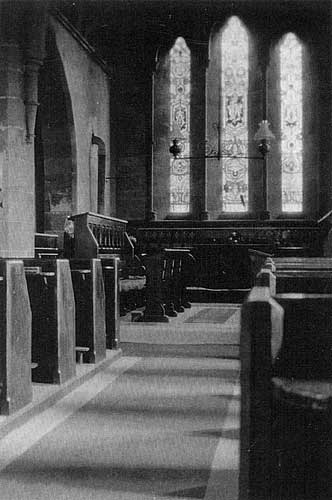
Much riper in years I met you--in a temple
Where summer sunset streamed upon our shapes,
And you spread over me like a gauze that drapes,
And flapped from floor to rafters,
Sweet as angels' laughters.

But you had been stripped of some of your old vesture
By Monk, or another. Now you wore no frill,
And at first you startled me. But I knew you still,
Though I missed the minim's waver,
And the dotted quaver.

I grew accustomed to you thus. And you hailed me
Through one who evoked you often. Then at last
Your raiser was borne off, and I mourned you had passed
From my life with your late outsetter;
Till I said, "'Tis better!"

But you waylaid me. I rose and went as a ghost goes,
And said, eyes-full "I'll never hear it again!
It is overmuch for scathed and memoried men
When sitting among strange people
Under their steeple."

Now, a new stirrer of tones calls you up before me
And wakes your speech, as she of Endor did
(When sought by Saul who, in disguises hid,
Fell down on the earth to hear it)
Samuel's spirit.

So, your quired oracles beat till they make me tremble
As I discern your mien in the old attire,
Here in these turmoiled years of belligerent fire
Living still on--and onward, maybe,
Till Doom's great day be!

Sunday, August 13, 1916.
 Posted by Picasa

Her Confession


As some bland soul, to whom a debtor says
"I'll now repay the amount I owe to you,"
In inward gladness feigns forgetfulness
That such a payment ever was his due

(His long thought notwithstanding), so did I
At our last meeting waive your proffered kiss
With quick divergent talk of scenery nigh,
By such suspension to enhance my bliss.

And as his looks in consternation fall
When, gathering that the debt is lightly deemed,
The debtor makes as not to pay at all,
So faltered I, when your intention seemed

Converted by my false uneagerness
To putting off for ever the caress.

W. P. V., 1865-67.
 Posted by Picasa

The Stranger's Song


(As sung by MR. CHARLES CHARRINGTON in the play of "The Three Wayfarers")

O my trade it is the rarest one,
Simple shepherds all -
My trade is a sight to see;
For my customers I tie, and take 'em up on high,
And waft 'em to a far countree!

My tools are but common ones,
Simple shepherds all -
My tools are no sight to see:
A little hempen string, and a post whereon to swing,
Are implements enough for me!

To-morrow is my working day,
Simple shepherds all -
To-morrow is a working day for me:
For the farmer's sheep is slain, and the lad who did it ta'en,
And on his soul may God ha' mer-cy!

 Posted by Picasa

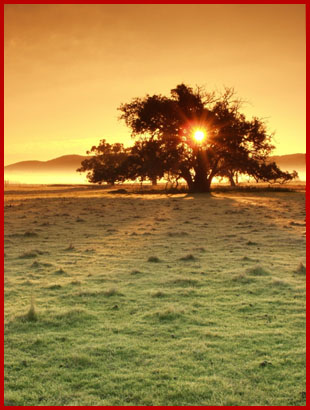
On a Fine Morning


I

Whence comes Solace?--Not from seeing
What is doing, suffering, being,
Not from noting Life's conditions,
Nor from heeding Time's monitions;
But in cleaving to the Dream,
And in gazing at the gleam
Whereby gray things golden seem.

II

Thus do I this heyday, holding
Shadows but as lights unfolding,
As no specious show this moment
With its irised embowment;
But as nothing other than
Part of a benignant plan;
Proof that earth was made for man.

February 1899.
 Posted by Picasa

An Autumn Rain-Scene


There trudges one to a merry-making
With a sturdy swing,
On whom the rain comes down.

To fetch the saving medicament
Is another bent,
On whom the rain comes down.

One slowly drives his herd to the stall
Ere ill befall,
On whom the rain comes down.

This bears his missives of life and death
With quickening breath,
On whom the rain comes down.

One watches for signals of wreck or war
From the hill afar,
On whom the rain comes down.

No care if he gain a shelter or none,
Unhired moves one,
On whom the rain comes down.

And another knows nought of its chilling fall
Upon him at all,
On whom the rain comes down.

October 1904.

 Posted by Picasa

The Spell of the Rose (II)


"I'll mend these miseries," then said I,
And so, at dead of night,
I went and, screened from sight,
That nought should keep our souls in severance,
I set a rose-bush. "This," said I,
"May end divisions dire and wry,
And long-drawn days of blight."

But I was called from earth--yea, called
Before my rose-bush grew;
And would that now I knew
What feels he of the tree I planted,
And whether, after I was called
To be a ghost, he, as of old,
Gave me his heart anew!

Perhaps now blooms that queen of trees
I set but saw not grow,
And he, beside its glow -
Eyes couched of the mis-vision that blurred me -
Ay, there beside that queen of trees
He sees me as I was, though sees
Too late to tell me so!
 Posted by Picasa

The Spell of the Rose (I)


"I mean to build a hall anon,
And shape two turrets there,
And a broad newelled stair,
And a cool well for crystal water;
Yes; I will build a hall anon,
Plant roses love shall feed upon,
And apple trees and pear."

He set to build the manor-hall,
And shaped the turrets there,
And the broad newelled stair,
And the cool well for crystal water;
He built for me that manor-hall,
And planted many trees withal,
But no rose anywhere.

And as he planted never a rose
That bears the flower of love,
Though other flowers throve
A frost-wind moved our souls to sever
Since he had planted never a rose;
And misconceits raised horrid shows,
And agonies came thereof.

(tbc)
 Posted by Picasa

Great Things (IV)


Will these be always great things,
Great things to me? ...
Let it befall that One will call,
"Soul, I have need of thee:"
What then? Joy-jaunts, impassioned flings,
Love, and its ecstasy,
Will always have been great things,
Great things to me!
 Posted by Picasa

Great Things (III)


Love is, yea, a great thing,
A great thing to me,
When, having drawn across the lawn
In darkness silently,
A figure flits like one a-wing
Out from the nearest tree:
O love is, yes, a great thing,
A great thing to me!
 Posted by Picasa

Away...

... for a week. See you on the 13th?

RR

Great Things (II)


The dance it is a great thing,
A great thing to me,
With candles lit and partners fit
For night-long revelry;
And going home when day-dawning
Peeps pale upon the lea:
O dancing is a great thing,
A great thing to me!
 Posted by Picasa

Great Things (I)


Sweet cyder is a great thing,
A great thing to me,
Spinning down to Weymouth town
By Ridgway thirstily,
And maid and mistress summoning
Who tend the hostelry:
O cyder is a great thing,
A great thing to me!
 Posted by Picasa

Postponement


Snow-bound in woodland, a mournful word,
Dropt now and then from the bill of a bird,
Reached me on wind-wafts; and thus I heard,
Wearily waiting:-

"I planned her a nest in a leafless tree,
But the passers eyed and twitted me,
And said: 'How reckless a bird is he,
Cheerily mating!'

"Fear-filled, I stayed me till summer-tide,
In lewth of leaves to throne her bride;
But alas! her love for me waned and died,
Wearily waiting.

"Ah, had I been like some I see,
Born to an evergreen nesting-tree,
None had eyed and twitted me,
Cheerily mating!"

1866.
 Posted by Picasa

The Difference


I

Sinking down by the gate I discern the thin moon,
And a blackbird tries over old airs in the pine,
But the moon is a sorry one, sad the bird's tune,
For this spot is unknown to that Heartmate of mine.

II

Did my Heartmate but haunt here at times such as now,
The song would be joyous and cheerful the moon;
But she will see never this gate, path, or bough,
Nor I find a joy in the scene or the tune.
 Posted by Picasa

Before Knowledge (excerpt)


When I walked roseless tracks and wide,
Ere dawned your date for meeting me,
O why did you not cry Halloo
Across the stretch between, and say:

"We move, while years as yet divide,
On closing lines which--though it be
You know me not nor I know you -
Will intersect and join some day!"
 Posted by Picasa

On a Fine Morning


Whence comes Solace? - Not from seeing
What is doing, suffering, being,
Not from noting Life's conditions,
Nor from heeding Time's monitions;
But in cleaving to the Dream,
And in gazing at the gleam
Whereby gray things golden seem.

II

Thus do I this heyday, holding
Shadows but as lights unfolding,
As no specious show this moment
With its irised embowment;
But as nothing other than
Part of a benignant plan;
Proof that earth was made for man.

February 1899.
 Posted by Picasa

The Respectable Burgher on "The Higher Criticism"


Since Reverend Doctors now declare
That clerks and people must prepare
To doubt if Adam ever were;
To hold the flood a local scare;
To argue, though the stolid stare,
That everything had happened ere
The prophets to its happening sware;
That David was no giant-slayer,
Nor one to call a God-obeyer
In certain details we could spare,
But rather was a debonair
Shrewd bandit, skilled as banjo-player:
That Solomon sang the fleshly Fair,
And gave the Church no thought whate'er;
That Esther with her royal wear,
And Mordecai, the son of Jair,
And Joshua's triumphs, Job's despair,
And Balaam's ass's bitter blare;
Nebuchadnezzar's furnace-flare,
And Daniel and the den affair,
And other stories rich and rare,
Were writ to make old doctrine wear
Something of a romantic air:
That the Nain widow's only heir,
And Lazarus with cadaverous glare
(As done in oils by Piombo's care)
Did not return from Sheol's lair:
That Jael set a fiendish snare,
That Pontius Pilate acted square,
That never a sword cut Malchus' ear
And (but for shame I must forbear)
That - - - - - did not reappear! ...
- Since thus they hint, nor turn a hair,
All churchgoing will I forswear,
And sit on Sundays in my chair,
And read that moderate man Voltaire.

Comment
Although the questions of 'higher criticism' (now called historical criticism) are widely recognized by Orthodox Jews and many Christians as legitimate questions, they often find the answers given by the radical higher critics completely unsatisfactory or even heretical.

In particular, Evangelical Christians object to the rationalistic and naturalistic presuppositions of a large number of practioneers of higher criticism that leads to conclusions that the orthodox find unacceptable.

Most 'higher critcism' has now been discredited as a result of its own presuppositions.

(RR)

 Posted by Picasa

Shut out that Moon


Close up the casement, draw the blind,
Shut out that stealing moon,
She wears too much the guise she wore
Before our lutes were strewn
With years-deep dust, and names we read
On a white stone were hewn.

Step not out on the dew-dashed lawn
To view the Lady's Chair,
Immense Orion's glittering form,
The Less and Greater Bear:
Stay in; to such sights we were drawn
When faded ones were fair.

Brush not the bough for midnight scents
That come forth lingeringly,
And wake the same sweet sentiments
They breathed to you and me
When living seemed a laugh, and love
All it was said to be.

Within the common lamp-lit room
Prison my eyes and thought;
Let dingy details crudely loom,
Mechanic speech be wrought:
Too fragrant was Life's early bloom,
Too tart the fruit it brought!

1904.
 Posted by Picasa

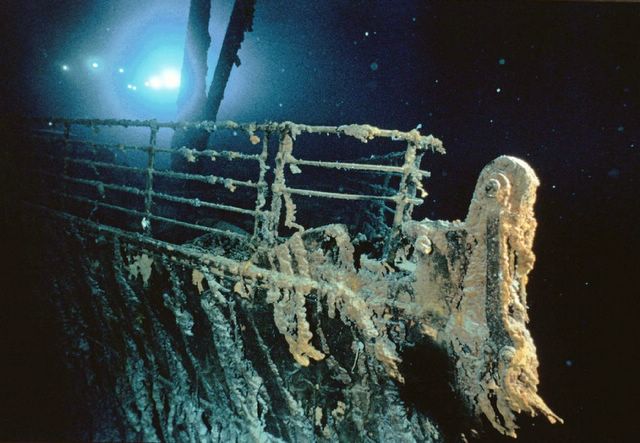
The Convergence of the Twain


(Lines on the loss of the "Titanic")

I

In a solitude of the sea
Deep from human vanity,
And the Pride of Life that planned her, stilly couches she.

II

Steel chambers, late the pyres
Of her salamandrine fires,
Cold currents thrid, and turn to rhythmic tidal lyres.

III

Over the mirrors meant
To glass the opulent
The sea-worm crawls--grotesque, slimed, dumb, indifferent.

IV

Jewels in joy designed
To ravish the sensuous mind
Lie lightless, all their sparkles bleared and black and blind.

V

Dim moon-eyed fishes near
Gaze at the gilded gear
And query: "What does this vaingloriousness down here?" . . .

VI

Well: while was fashioning
This creature of cleaving wing,
The Immanent Will that stirs and urges everything

VII

Prepared a sinister mate
For her--so gaily great -
A Shape of Ice, for the time far and dissociate.

VIII

And as the smart ship grew
In stature, grace, and hue,
In shadowy silent distance grew the Iceberg too.

IX

Alien they seemed to be:
No mortal eye could see
The intimate welding of their later history,

X

Or sign that they were bent
By paths coincident
On being anon twin halves of one august event,

XI

Till the Spinner of the Years
Said "Now!" And each one hears,
And consummation comes, and jars two hemispheres.
 Posted by Picasa

The Dolls


"Whenever you dress me dolls, mammy,
Why do you dress them so,
And make them gallant soldiers,
When never a one I know;
And not as gentle ladies
With frills and frocks and curls,
As people dress the dollies
Of other little girls?"

Ah--why did she not answer:-
"Because your mammy's heed
Is always gallant soldiers,
As well may be, indeed.
One of them was your daddy,
His name I must not tell;
He's not the dad who lives here,
But one I love too well."
 Posted by Picasa