She wore a new "terra-cotta" dress,
And we stayed, because of the pelting storm,
Within the hansom's dry recess,
Though the horse had stopped; yea, motionless
We sat on, snug and warm.
Then the downpour ceased, to my sharp sad pain,
And the glass that had screened our forms before
Flew up, and out she sprang to her door:
I should have kissed her if the rain
Had lasted a minute more.


Shelley's Skylark

Somewhere afield here something lies
In Earth's oblivious eyeless trust
That moved a poet to prophecies -
A pinch of unseen, unguarded dust
The dust of the lark that Shelley heard,
And made immortal through times to be; -
Though it only lived like another bird,
And knew not its immortality.
Lived its meek life; then, one day, fell -
A little ball of feather and bone;
And how it perished, when piped farewell,
And where it wastes, are alike unknown.
Maybe it rests in the loam I view,
Maybe it throbs in a myrtle's green,
Maybe it sleeps in the coming hue
Of a grape on the slopes of yon inland scene.
Go find it, faeries, go and find
That tiny pinch of priceless dust,
And bring a casket silver-lined,
And framed of gold that gems encrust;
And we will lay it safe therein,
And consecrate it to endless time;
For it inspired a bard to win
Ecstatic heights in thought and rhyme.
Afternoon Service at Mellstock
(Circa 1850)
On afternoons of drowsy calm
We stood in the panelled pew,
Singing one-voiced a Tate-and-Brady psalm
To the tune of "Cambridge New."
We watched the elms, we watched the rooks,
The clouds upon the breeze,
Between the whiles of glancing at our books,
And swaying like the trees.
So mindless were those outpourings! -
Though I am not aware
That I have gained by subtle thought on things
Since we stood psalming there.
The Garden Seat
Its former green is blue and thin,
And its once firm legs sink in and in;
Soon it will break down unaware,
Soon it will break down unaware.
At night when reddest flowers are black
Those who once sat thereon come back;
Quite a row of them sitting there,
Quite a row of them sitting there.
With them the seat does not break down,
Nor winter freeze them, nor floods drown,
For they are as light as upper air,
They are as light as upper air!
Neutral Tones (excerpt)
 We stood by a pond that winter day,
And the sun was white, as though chidden of God,
And a few leaves lay on the starving sod,
--They had fallen from an ash, and were gray.
Your eyes on me were as eyes that rove
Over tedious riddles solved years ago;
And some words played between us to and fro -
On which lost the more by our love.
The smile on your mouth was the deadest thing
Alive enough to have strength to die;
And a grin of bitterness swept thereby
Like an ominous bird a-wing . . .
The House of Hospitalities
 Here we broached the Christmas barrel,
Pushed up the charred log-ends;
Here we sang the Christmas carol,
And called in friends.
Time has tired me since we met here
When the folk now dead were young,
Since the viands were outset here
And quaint songs sung.
And the worm has bored the viol
That used to lead the tune,
Rust eaten out the dial
That struck night's noon.
Now no Christmas brings in neighbours,
And the New Year comes unlit;
Where we sang the mole now labours,
And spiders knit.
Yet at midnight if here walking,
When the moon sheets wall and tree,
I see forms of old time talking,
Who smile on me.
The Farm-Woman's Winter
 I
If seasons all were summers,
And leaves would never fall,
And hopping casement-comers
Were foodless not at all,
And fragile folk might be here
That white winds bid depart;
Then one I used to see here
Would warm my wasted heart!
II
One frail, who, bravely tilling
Long hours in gripping gusts,
Was mastered by their chilling,
And now his ploughshare rusts.
So savage winter catches
The breath of limber things,
And what I love he snatches,
And what I love not, brings.
The Oxen
 Christmas Eve, and twelve of the clock.
"Now they are all on their knees,"
An elder said as we sat in a flock
By the embers in hearthside ease.
We pictured the meek mild creatures where
They dwelt in their strawy pen,
Nor did it occur to one of us there
To doubt they were kneeling then.
So fair a fancy few would weave
In these years! Yet, I feel,
If someone said on Christmas Eve,
"Come; see the oxen kneel
"In the lonely barton by yonder coomb
Our childhood used to know,"
I should go with him in the gloom,
Hoping it might be so.
1915.
The Lost Pyx (Part III)

And gathered around the illumined ground
Were common beasts and rare,
All kneeling at gaze, and in pause profound
Attent on an object there.
'Twas the Pyx, unharmed 'mid the circling rows
Of Blackmore's hairy throng,
Whereof were oxen, sheep, and does,
And hares from the brakes among;
And badgers grey, and conies keen,
And squirrels of the tree,
And many a member seldom seen
Of Nature's family.
The ireful winds that scoured and swept
Through coppice, clump, and dell,
Within that holy circle slept
Calm as in hermit's cell.
Then the priest bent likewise to the sod
And thanked the Lord of Love,
And Blessed Mary, Mother of God,
And all the saints above.
And turning straight with his priceless freight,
He reached the dying one,
Whose passing sprite had been stayed for the rite
Without which bliss hath none.
And when by grace the priest won place,
And served the Abbey well,
He reared this stone to mark where shone
That midnight miracle.

The Lost Pyx (Part II)

There seemed not a holy thing in hail,
Nor shape of light or love,
From the Abbey north of Blackmore Vale
To the Abbey south thereof.
Yet he plodded thence through the dark immense,
And with many a stumbling stride
Through copse and briar climbed nigh and nigher
To the cot and the sick man's side.
When he would have unslung the Vessels uphung
To his arm in the steep ascent,
He made loud moan: the Pyx was gone
Of the Blessed Sacrament.
Then in dolorous dread he beat his head:
"No earthly prize or pelf
Is the thing I've lost in tempest tossed,
But the Body of Christ Himself!"
He thought of the Visage his dream revealed,
And turned towards whence he came,
Hands groping the ground along foot-track and field,
And head in a heat of shame.
Till here on the hill, betwixt vill and vill,
He noted a clear straight ray
Stretching down from the sky to a spot hard by,
Which shone with the light of day.
The Lost Pyx - A Mediaeval Legend (Part 1)
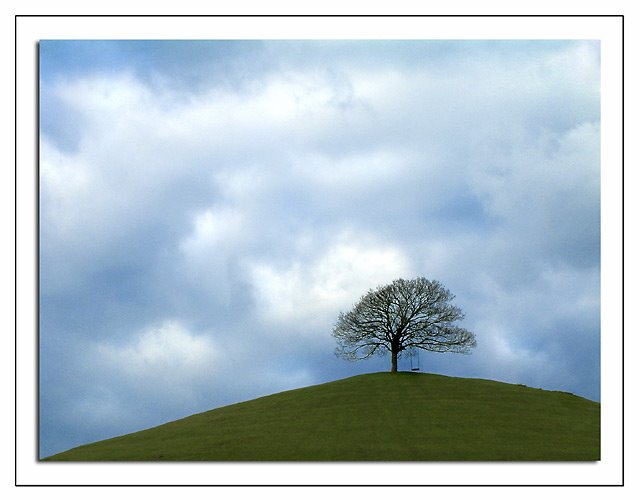
Some say the spot is banned; that the pillar Cross-and-Hand
Attests to a deed of hell;
But of else than of bale is the mystic tale
That ancient Vale-folk tell.
Ere Cernel's Abbey ceased hereabout there dwelt a priest,
(In later life sub-prior
Of the brotherhood there, whose bones are now bare
In the field that was Cernel choir).
One night in his cell at the foot of yon dell
The priest heard a frequent cry:
"Go, father, in haste to the cot on the waste,
And shrive a man waiting to die."
Said the priest in a shout to the caller without,
"The night howls, the tree-trunks bow;
One may barely by day track so rugged a way,
And can I then do so now?"
No further word from the dark was heard,
And the priest moved never a limb;
And he slept and dreamed; till a Visage seemed
To frown from Heaven at him.
In a sweat he arose; and the storm shrieked shrill,
And smote as in savage joy;
While High-Stoy trees twanged to Bubb-Down Hill,
And Bubb-Down to High-Stoy.
Thoughts of Phena at News of Her Death
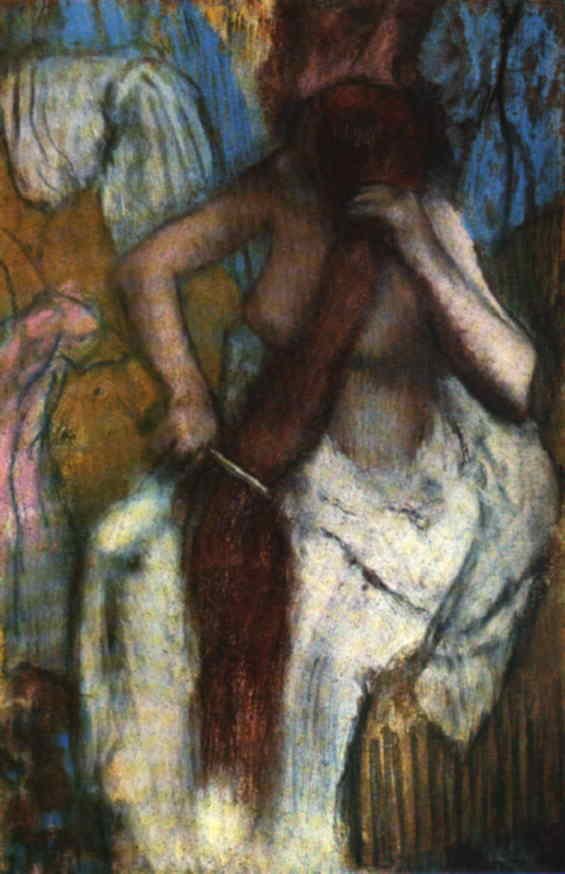
Not a line of her writing have I,
Not a thread of her hair,
No mark of her late time as dame in her dwelling, whereby
I may picture her there;
And in vain do I urge my unsight
To conceive my lost prize
At her close, whom I knew when her dreams were upbrimming with light,
And with laughter her eyes.
What scenes spread around her last days,
Sad, shining, or dim?
Did her gifts and compassions enray and enarch her sweet ways
With an aureate nimb?
Or did life-light decline from her years,
And mischances control
Her full day-star; unease, or regret, or forebodings, or fears
Disennoble her soul?
Thus I do but the phantom retain
Of the maiden of yore
As my relic; yet haply the best of her--fined in my brain
It maybe the more
That no line of her writing have I,
Nor a thread of her hair,
No mark of her late time as dame in her dwelling, whereby
I may picture her there.
March 1890.
My Spirit Will Not Haunt The Mound
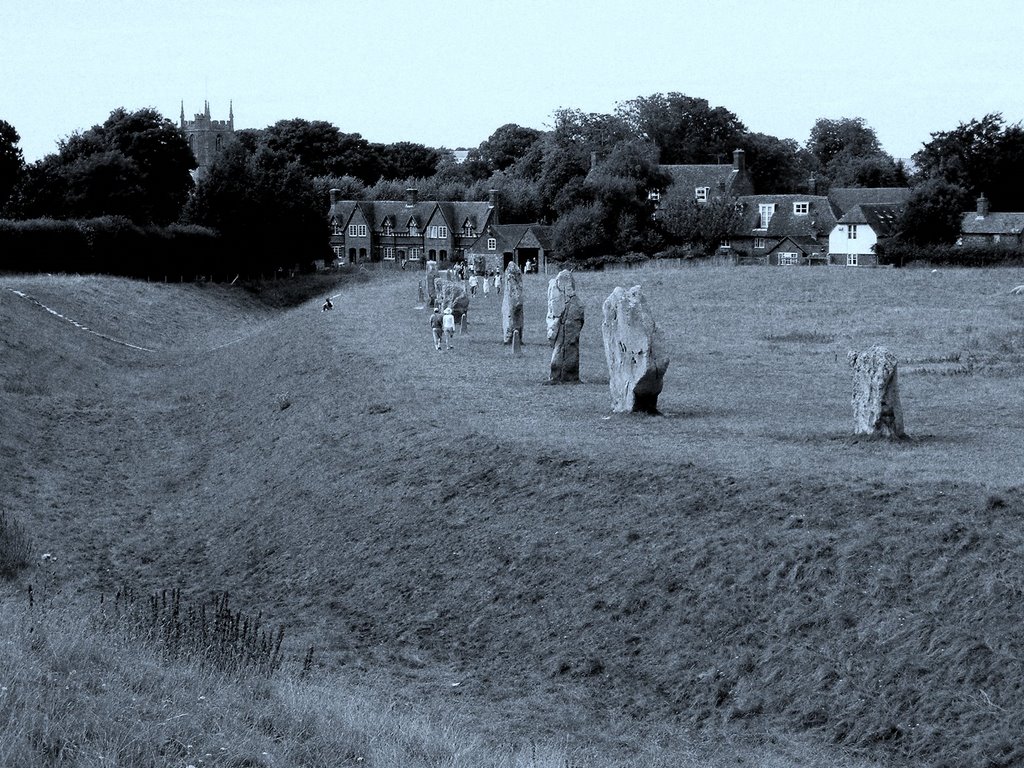
My spirit will not haunt the mound
Above my breast,
But travel, memory-possessed,
To where my tremulous being found
Life largest, best.
My phantom-footed shape will go
When nightfall grays
Hither and thither along the ways
I and another used to know
In backward days.
And there you'll find me, if a jot
You still should care
For me, and for my curious air;
If otherwise, then I shall not,
For you, be there.
Autumn in King's Hintock Park
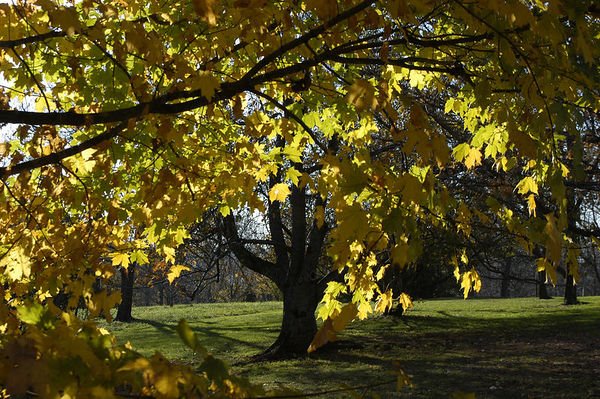
Here by the baring bough
Raking up leaves,
Often I ponder how
Springtime deceives, -
I, an old woman now,
Raking up leaves.
Here in the avenue
Raking up leaves,
Lords' ladies pass in view,
Until one heaves
Sighs at life's russet hue,
Raking up leaves!
Just as my shape you see
Raking up leaves,
I saw, when fresh and free,
Those memory weaves
Into grey ghosts by me,
Raking up leaves.
Yet, Dear, though one may sigh,
Raking up leaves,
New leaves will dance on high -
Earth never grieves! -
Will not, when missed am I
Raking up leaves.
1901.
He Prefers Her Earthly

This after-sunset is a sight for seeing,
Cliff-heads of craggy cloud surrounding it.
--And dwell you in that glory-show?
You may; for there are strange strange things in being,
Stranger than I know.
Yet if that chasm of splendour claim your presence
Which glows between the ash cloud and the dun,
How changed must be your mortal mould!
Changed to a firmament-riding earthless essence
From what you were of old:
All too unlike the fond and fragile creature
Then known to me ... Well, shall I say it plain?
I would not have you thus and there,
But still would grieve on, missing you, still feature
You as the one you were.
To Lizbie Browne (excerpt)

I
Dear Lizbie Browne,
Where are you now?
In sun, in rain? -
Or is your brow
Past joy, past pain,
Dear Lizbie Browne?
II
Sweet Lizbie Browne
How you could smile,
How you could sing! -
How archly wile
In glance-giving,
Sweet Lizbie Browne!
III
And, Lizbie Browne,
Who else had hair
Bay-red as yours,
Or flesh so fair
Bred out of doors,
Sweet Lizbie Browne?
The Homecoming (excerpt)

Now sit ye by the fire, poppet; put yourself at ease:
And keep your little thumb out of your mouth, dear, please!
And I'll sing to 'ee a pretty song of lovely flowers and bees,
And happy lovers taking walks within a grove o' trees.
Now, don't ye gnaw your handkercher; 'twill hurt your little tongue,
And if you do feel spitish, 'tis because ye are over young;
But you'll be getting older, like us all, ere very long,
And you'll see me as I am--a man who never did 'ee wrong."
The Selfsame Song

(Image: 'Summer Parish' - Carry Akroyd)
A bird bills the selfsame song,
With never a fault in its flow,
That we listened to here those long
Long years ago.
A pleasing marvel is how
A strain of such rapturous rote
Should have gone on thus till now
Unchanged in a note!
- But it's not the selfsame bird. -
No: perished to dust is he . . .
As also are those who heard
That song with me.
A Night in November

I marked when the weather changed,
And the panes began to quake,
And the winds rose up and ranged,
That night, lying half-awake.
Dead leaves blew into my room,
And alighted upon my bed,
And a tree declared to the gloom
Its sorrow that they were shed.
One leaf of them touched my hand,
And I thought that it was you
There stood as you used to stand,
And saying at last you knew!
(?) 1913.
Welcome Home

To my native place
Bent upon returning,
Bosom all day burning
To be where my race
Well were known, 'twas much with me
There to dwell in amity.
Folk had sought their beds,
But I hailed: to view me
Under the moon, out to me
Several pushed their heads,
And to each I told my name,
Plans, and that therefrom I came.
"Did you? . . . Ah, 'tis true
I once heard, back a long time,
Here had spent his young time,
Some such man as you . . .
Good-night." The casement closed again,
And I was left in the frosty lane.
Subscribe to:
Posts (Atom)