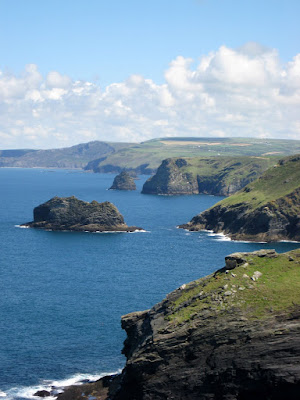
I look into my Glass

I look into my glass,
And view my wasting skin,
And say, "Would God it came to pass
My heart had shrunk as thin!"

For then, I, undistrest
By hearts grown cold to me,
Could lonely wait my endless rest
With equanimity.

But Time, to make me grieve;
Part steals, lets part abide;
And shakes this fragile frame at eve
With throbbings of noontide.

From Her in the Country

I thought and thought of thy crass clanging town
To folly, till convinced such dreams were ill,
I held my heart in bond, and tethered down
Fancy to where I was, by force of will.

I said: How beautiful are these flowers, this wood,
One little bud is far more sweet to me
Than all man's urban shows; and then I stood
Urging new zest for bird, and bush, and tree;

And strove to feel my nature brought it forth
Of instinct, or no rural maid was I;
But it was vain; for I could not see worth
Enough around to charm a midge or fly,

And mused again on city din and sin,
Longing to madness I might move therein!

Lament

How she would have loved
A party to-day! -
Bright-hatted and gloved,
With table and tray
And chairs on the lawn
Her smiles would have shone
With welcomings . . . But
She is shut, she is shut
From friendship's spell
In the jailing shell
Of her tiny cell.

Or she would have reigned
At a dinner to-night
With ardours unfeigned,
And a generous delight;
All in her abode
She'd have freely bestowed
On her guests . . . But alas,
She is shut under grass
Where no cups flow,
Powerless to know
That it might be so.

And she would have sought
With a child's eager glance
The shy snowdrops brought
By the new year's advance,
And peered in the rime
Of Candlemas-time
For crocuses . . . chanced
It that she were not tranced
From sights she loved best;
Wholly possessed
By an infinite rest!

And we are here staying
Amid these stale things
Who care not for gaying,
And those junketings
That used so to joy her,
And never to cloy her
As us they cloy! . . . But
She is shut, she is shut
From the cheer of them, dead
To all done and said
In a yew-arched bed.

When I set our for Lyonnesse

When I set out for Lyonnesse,
A hundred miles away,
The rime was on the spray,
And starlight lit my lonesomeness
When I set out for Lyonnesse
A hundred miles away.

What would bechance at Lyonnesse
While I should sojourn there
No prophet durst declare,
Nor did the wisest wizard guess
What would bechance at Lyonnesse
While I should sojourn there.

When I came back from Lyonnesse
With magic in my eyes,
None managed to surmise
What meant my godlike gloriousness,
When I came back from Lyonnesse
With magic in my eyes.

Without Ceremony

It was your way, my dear,
To be gone without a word
When callers, friends, or kin
Had left, and I hastened in
To rejoin you, as I inferred.

And when you'd a mind to career
Off anywhere--say to town -
You were all on a sudden gone
Before I had thought thereon,
Or noticed your trunks were down.


So, now that you disappear
For ever in that swift style,
Your meaning seems to me
Just as it used to be:
"Good-bye is not worth while!"

I found her out there (II)

So she does not sleep
By those haunted heights
The Atlantic smites
And the blind gales sweep,
Whence she often would gaze
At Dundagel's far head,
While the dipping blaze
Dyed her face fire-red;

And would sigh at the tale
Of sunk Lyonnesse,
As a wind-tugged tress
Flapped her cheek like a flail;
Or listen at whiles
With a thought-bound brow
To the murmuring miles
She is far from now.

Yet her shade, maybe,
Will creep underground
Till it catch the sound
Of that western sea
As it swells and sobs
Where she once domiciled,
And joy in its throbs
With the heart of a child.

I found her out there (I)

I found her out there
On a slope few see,
That falls westwardly
To the salt-edged air,
Where the ocean breaks
On the purple strand,
And the hurricane shakes
The solid land.

I brought her here,
And have laid her to rest
In a noiseless nest
No sea beats near.
She will never be stirred
In her loamy cell
By the waves long heard
And loved so well.

A hiatus

I am away in foreign parts for a fortnight or so from the 19th… I will try to make the odd post, but may not be able to do so. Normal service will be resumed on my return.

The Walk

You did not walk with me
Of late to the hill-top tree
By the gated ways,
As in earlier days;
You were weak and lame,
So you never came,
And I went alone, and I did not mind,
Not thinking of you as left behind.

I walked up there to-day
Just in the former way:
Surveyed around
The familiar ground
By myself again:
What difference, then?
Only that underlying sense
Of the look of a room on returning thence.

Your Last Drive

Here by the moorway you returned,
And saw the borough lights ahead
That lit your face--all undiscerned
To be in a week the face of the dead,
And you told of the charm of that haloed view
That never again would beam on you.

And on your left you passed the spot
Where eight days later you were to lie,
And be spoken of as one who was not;
Beholding it with a cursory eye
As alien from you, though under its tree
You soon would halt everlastingly.

I drove not with you . . . Yet had I sat
At your side that eve I should not have seen
That the countenance I was glancing at
Had a last-time look in the flickering sheen,
Nor have read the writing upon your face,
"I go hence soon to my resting-place;

"You may miss me then. But I shall not know
How many times you visit me there,
Or what your thoughts are, or if you go
There never at all. And I shall not care.
Should you censure me I shall take no heed
And even your praises I shall not need."

True: never you'll know. And you will not mind.
But shall I then slight you because of such?
Dear ghost, in the past did you ever find
The thought "What profit?" move me much
Yet the fact indeed remains the same,
You are past love, praise, indifference, blame.

December 1912.

The Going

[The view from atop Beeny Cliff]

Why did you give no hint that night
That quickly after the morrow's dawn,
And calmly, as if indifferent quite,
You would close your term here, up and be gone
Where I could not follow
With wing of swallow
To gain one glimpse of you ever anon!

Never to bid good-bye,
Or give me the softest call,
Or utter a wish for a word, while I
Saw morning harden upon the wall,
Unmoved, unknowing
That your great going
Had place that moment, and altered all.

Why do you make me leave the house
And think for a breath it is you I see
At the end of the alley of bending boughs
Where so often at dusk you used to be;
Till in darkening dankness
The yawning blankness
Of the perspective sickens me!

You were she who abode
By those red-veined rocks far West,
You were the swan-necked one who rode
Along the beetling Beeny Crest,
And, reining nigh me,
Would muse and eye me,
While Life unrolled us its very best.

Why, then, latterly did we not speak,
Did we not think of those days long dead,
And ere your vanishing strive to seek
That time's renewal? We might have said,
"In this bright spring weather
We'll visit together
Those places that once we visited."

Well, well! All's past amend,
Unchangeable. It must go.
I seem but a dead man held on end
To sink down soon . . . O you could not know
That such swift fleeing
No soul foreseeing -
Not even I--would undo me so!

December 1912.

Beeny Cliff

March 1870--March 1913

I
O the opal and the sapphire of that wandering western sea,
And the woman riding high above with bright hair flapping free -
The woman whom I loved so, and who loyally loved me.

II
The pale mews plained below us, and the waves seemed far away
In a nether sky, engrossed in saying their ceaseless babbling say,
As we laughed light-heartedly aloft on that clear-sunned March day.

III
A little cloud then cloaked us, and there flew an irised rain,
And the Atlantic dyed its levels with a dull misfeatured stain,
And then the sun burst out again, and purples prinked the main.

IV
--Still in all its chasmal beauty bulks old Beeny to the sky,
And shall she and I not go there once again now March is nigh,
And the sweet things said in that March say anew there by and by?

V
What if still in chasmal beauty looms that wild weird western shore,
The woman now is--elsewhere--whom the ambling pony bore,
And nor knows nor cares for Beeny, and will see it nevermore.

A Death-Day Recalled

[Beeny Cliff]

Beeny did not quiver,
Juliot grew not gray,
Thin Valency's river
Held its wonted way.
Bos seemed not to utter
Dimmest note of dirge,
Targan mouth a mutter
To its creamy surge.

Yet though these, unheeding,
Listless, passed the hour
Of her spirit's speeding,
She had, in her flower,
Sought and loved the places -
Much and often pined
For their lonely faces
When in towns confined.

Why did not Valency
In his purl deplore
One whose haunts were whence he
Drew his limpid store?
Why did Bos not thunder,
Targan apprehend
Body and breath were sunder
Of their former friend?

After A Journey

[Pentargon Cliff]
.
Hereto I come to interview a ghost;
Whither, O whither will its whim now draw me?
Up the cliff, down, till I'm lonely, lost,
And the unseen waters' ejaculations awe me.
Where you will next be there's no knowing,
Facing round about me everywhere,
With your nut-coloured hair,
And gray eyes, and rose-flush coming and going.

Yes: I have re-entered your olden haunts at last;
Through the years, through the dead scenes I have tracked you;
What have you now found to say of our past -
Viewed across the dark space wherein I have lacked you?
Summer gave us sweets, but autumn wrought division?
Things were not lastly as firstly well
With us twain, you tell?
But all's closed now, despite Time's derision.

I see what you are doing: you are leading me on
To the spots we knew when we haunted here together,
The waterfall, above which the mist-bow shone
At the then fair hour in the then fair weather,
And the cave just under, with a voice still so hollow
That it seems to call out to me from forty years ago,
When you were all aglow,
And not the thin ghost that I now frailly follow!

Ignorant of what there is flitting here to see,
The waked birds preen and the seals flop lazily,
Soon you will have, Dear, to vanish from me,
For the stars close their shutters and the dawn whitens hazily.
Trust me, I mind not, though Life lours,
The bringing me here; nay, bring me here again!
I am just the same as when
Our days were a joy, and our paths through flowers.

PENTARGAN BAY.

A Dream or No

[St Juliot: The ford through the river Valency]

Why go to Saint-Juliot? What's Juliot to me?
I was but made fancy
By some necromancy
That much of my life claims the spot as its key.

Yes. I have had dreams of that place in the West,
And a maiden abiding
Thereat as in hiding;
Fair-eyed and white-shouldered, broad-browed and brown-tressed.

And of how, coastward bound on a night long ago,
There lonely I found her,
The sea-birds around her,
And other than nigh things uncaring to know.

So sweet her life there (in my thought has it seemed)
That quickly she drew me
To take her unto me,
And lodge her long years with me. Such have I dreamed.

But nought of that maid from Saint-Juliot I see;
Can she ever have been here,
And shed her life's sheen here,
The woman I thought a long housemate with me?

Does there even a place like Saint-Juliot exist?
Or a Vallency Valley
With stream and leafed alley,
Or Beeny, or Bos with its flounce flinging mist?

February 1913.

At Castle Boterel

As I drive to the junction of lane and highway,
And the drizzle bedrenches the waggonette,
I look behind at the fading byway,
And see on its slope, now glistening wet,
Distinctly yet

Myself and a girlish form benighted
In dry March weather. We climb the road
Beside a chaise. We had just alighted
To ease the sturdy pony's load
When he sighed and slowed.

What we did as we climbed, and what we talked of
Matters not much, nor to what it led, -
Something that life will not be balked of
Without rude reason till hope is dead,
And feeling fled.

It filled but a minute. But was there ever
A time of such quality, since or before,
In that hill's story? To one mind never,
Though it has been climbed, foot-swift, foot-sore,
By thousands more.

Primaeval rocks form the road's steep border,
And much have they faced there, first and last,
Of the transitory in Earth's long order;
But what they record in colour and cast
Is--that we two passed.

And to me, though Time's unflinching rigour,
In mindless rote, has ruled from sight
The substance now, one phantom figure
Remains on the slope, as when that night
Saw us alight.

I look and see it there, shrinking, shrinking,
I look back at it amid the rain
For the very last time; for my sand is sinking,
And I shall traverse old love's domain
Never again.

March 1913.

The Place on the Map


I
I look upon the map that hangs by me -
Its shires and towns and rivers lined in varnished artistry -
And I mark a jutting height
Coloured purple, with a margin of blue sea.

II
--'Twas a day of latter summer, hot and dry;
Ay, even the waves seemed drying as we walked on, she and I,
By this spot where, calmly quite,
She informed me what would happen by and by.

III
This hanging map depicts the coast and place,
And resuscitates therewith our unexpected troublous case
All distinctly to my sight,
And her tension, and the aspect of her face.

IV
Weeks and weeks we had loved beneath that blazing blue,
Which had lost the art of raining, as her eyes to-day had too,
While she told what, as by sleight,
Shot our firmament with rays of ruddy hue.

V
For the wonder and the wormwood of the whole
Was that what in realms of reason would have joyed our double soul
Wore a torrid tragic light
Under order-keeping's rigorous control.

VI
So, the map revives her words, the spot, the time,
And the thing we found we had to face before the next year's prime;
The charted coast stares bright,
And its episode comes back in pantomime.

The Children and Sir Nameless

Sir Nameless, once of Athelhall, declared:
"These wretched children romping in my park
Trample the herbage till the soil is bared,
And yap and yell from early morn till dark!
Go keep them harnessed to their set routines:
Thank God I've none to hasten my decay;
For green remembrance there are better means
Than offspring, who but wish their sires away."

Sir Nameless of that mansion said anon:
"To be perpetuate for my mightiness
Sculpture must image me when I am gone."
- He forthwith summoned carvers there express
To shape a figure stretching seven-odd feet
(For he was tall) in alabaster stone,
With shield, and crest, and casque, and word complete:
When done a statelier work was never known.

Three hundred years hied; Church-restorers came,
And, no one of his lineage being traced,
They thought an effigy so large in frame
Best fitted for the floor. There it was placed,
Under the seats for schoolchildren. And they
Kicked out his name, and hobnailed off his nose;
And, as they yawn through sermon-time, they say,
"Who was this old stone man beneath our toes?"

Her Song

I sang that song on Sunday,
To witch an idle while,
I sang that song on Monday,
As fittest to beguile;
I sang it as the year outwore,
And the new slid in;
I thought not what might shape before
Another would begin.

I sang that song in summer,
All unforeknowingly,
To him as a new-comer
From regions strange to me:
I sang it when in afteryears
The shades stretched out,
And paths were faint; and flocking fears
Brought cup-eyed care and doubt.

Sings he that song on Sundays
In some dim land afar,
On Saturdays, or Mondays,
As when the evening star
Glimpsed in upon his bending face
And my hanging hair,
And time untouched me with a trace
Of soul-smart or despair?

A Man was Drawing Near to Me

[One of Gareth Buxton's beautiful paintings

On that gray night of mournful drone,
A part from aught to hear, to see,
I dreamt not that from shires unknown
In gloom, alone,
By Halworthy,
A man was drawing near to me.

I'd no concern at anything,
No sense of coming pull-heart play;
Yet, under the silent outspreading
Of even's wing
Where Otterham lay,
A man was riding up my way.

I thought of nobody--not of one,
But only of trifles--legends, ghosts--
Though, on the moorland dim and dun
That travellers shun
About these coasts,
The man had passed Tresparret Posts.
There was no light at all inland,
Only the seaward pharos-fire,
Nothing to let me understand
That hard at hand
By Hennett Byre
The man was getting nigh and nigher.

There was a rumble at the door,
A draught disturbed the drapery,
And but a minute passed before,
With gaze that bore
My destiny,
The man revealed himself to me.