A Spot


   In years defaced and lost,
   Two sat here, transport-tossed,
   Lit by a living love
The wilted world knew nothing of:
     Scared momently
     By gaingivings,
     Then hoping things
     That could not be.

   Of love and us no trace
   Abides upon the place;
   The sun and shadows wheel,
Season and season sereward steal;
     Foul days and fair
     Here, too, prevail,
     And gust and gale
     As everywhere.

   But lonely shepherd souls
   Who bask amid these knolls
   May catch a faery sound
On sleepy noontides from the ground:
     "O not again
     Till Earth outwears
     Shall love like theirs
     Suffuse this glen!"

If it's ever Spring again"

Song

If it's ever spring again,
     Spring again,
I shall go where went I when
Down the moor-cock splashed, and hen,
Seeing me not, amid their flounder,
Standing with my arm around her;
If it's ever spring again,
     Spring again,
I shall go where went I then.

If it's ever summer-time,
     Summer-time,
With the hay crop at the prime,
And the cuckoos--two--in rhyme,
As they used to be, or seemed to,
We shall do as long we've dreamed to,
If it's ever summer-time,
     Summer-time,
With the hay, and bees achime.

To an Orphan Child


A Whimsey

Ah, child, thou art but half thy darling mother's;
     Hers couldst thou wholly be,
My light in thee would outglow all in others;
     She would relive to me.
But niggard Nature's trick of birth
     Bars, lest she overjoy,
Renewal of the loved on earth
     Save with alloy.

The Dame has no regard, alas, my maiden,
     For love and loss like mine -
No sympathy with mind-sight memory-laden;
     Only with fickle eyne.
To her mechanic artistry
     My dreams are all unknown,
And why I wish that thou couldst be
     But One's alone!

Four Footprints

Here are the tracks upon the sand
Where stood last evening she and I -
Pressed heart to heart and hand to hand;
The morning sun has baked them dry.

I kissed her wet face--wet with rain,
For arid grief had burnt up tears,
While reached us as in sleeping pain
The distant gurgling of the weirs.

"I have married him--yes; feel that ring;
'Tis a week ago that he put it on . . .
A dutiful daughter does this thing,
And resignation succeeds anon!

"But that I body and soul was yours
Ere he'd possession, he'll never know.
He's a confident man. 'The husband scores,'
He says, 'in the long run' . . . Now, Dear, go!"

I went. And to-day I pass the spot;
It is only a smart the more to endure;
And she whom I held is as though she were not,
For they have resumed their honeymoon tour.

Summer Schemes

When friendly summer calls again,
          Calls again
Her little fifers to these hills,
We'll go--we two--to that arched fane
Of leafage where they prime their bills
Before they start to flood the plain
With quavers, minims, shakes, and trills.
     "--We'll go," I sing; but who shall say
     What may not chance before that day!

And we shall see the waters spring,
          Waters spring
From chinks the scrubby copses crown;
And we shall trace their oncreeping
To where the cascade tumbles down
And sends the bobbing growths aswing,
And ferns not quite but almost drown.
     "--We shall," I say; but who may sing
     Of what another moon will bring!

In a Wood

See "THE WOODLANDERS"

Pale beech and pine-tree blue,
Set in one clay,
Bough to bough cannot you
Bide out your day?
When the rains skim and skip,
Why mar sweet comradeship,
Blighting with poison-drip
Neighbourly spray?

Heart-halt and spirit-lame,
City-opprest,
Unto this wood I came
As to a nest;
Dreaming that sylvan peace
Offered the harrowed ease--
Nature a soft release
From men's unrest.

But, having entered in,
Great growths and small
Show them to men akin -
Combatants all!
Sycamore shoulders oak,
Bines the slim sapling yoke,
Ivy-spun halters choke
Elms stout and tall.

Touches from ash, O wych,
Sting you like scorn!
You, too, brave hollies, twitch
Sidelong from thorn.
Even the rank poplars bear
Illy a rival's air,
Cankering in black despair
If overborne.

Since, then, no grace I find
Taught me of trees,
Turn I back to my kind,
Worthy as these.
There at least smiles abound,
There discourse trills around,
There, now and then, are found
Life-loyalties.

1887: 1896.

The Fiddler


The fiddler knows what's brewing
To the lilt of his lyric wiles:
The fiddler knows what rueing
Will come of this night's smiles!

He sees couples join them for dancing,
And afterwards joining for life,
He sees them pay high for their prancing
By a welter of wedded strife.

He twangs: "Music hails from the devil,
Though vaunted to come from heaven,
For it makes people do at a revel
What multiplies sins by seven.

"There's many a heart now mangled,
And waiting its time to go,
Whose tendrils were first entangled
By my sweet viol and bow!"

Moments of Vision


That mirror
    Which makes of men a transparency,
    Who holds that mirror
And bids us such a breast-bare spectacle see
    Of you and me?

That mirror
    Whose magic penetrates like a dart,
    Who lifts that mirror
And throws our mind back on us, and our heart,
    Until we start?

That mirror
    Works well in these night hours of ache;
    Why in that mirror
Are tincts we never see ourselves once take
    When the world is awake?

That mirror
    Can test each mortal when unaware;
    Yea, that strange mirror
May catch his last thoughts, whole life foul or fair,
    Glassing it--where?

Middle-Age Enthusiasms

To M. H.


 We passed where flag and flower
  Signalled a jocund throng;
  We said: "Go to, the hour
  Is apt!"--and joined the song;
And, kindling, laughed at life and care,
Although we knew no laugh lay there.

  We walked where shy birds stood
  Watching us, wonder-dumb;
  Their friendship met our mood;
  We cried: "We'll often come:
We'll come morn, noon, eve, everywhen!"
- We doubted we should come again.

  We joyed to see strange sheens
  Leap from quaint leaves in shade;
  A secret light of greens
  They'd for their pleasure made.
We said: "We'll set such sorts as these!"
- We knew with night the wish would cease.

  "So sweet the place," we said,
  "Its tacit tales so dear,
  Our thoughts, when breath has sped,
  Will meet and mingle here!" . . .
"Words!" mused we. "Passed the mortal door,
Our thoughts will reach this nook no more."

A Backward Spring


The trees are afraid to put forth buds,
And there is timidity in the grass;
The plots lie gray where gouged by spuds,
    And whether next week will pass
Free of sly sour winds is the fret of each bush
    Of barberry waiting to bloom.

Yet the snowdrop's face betrays no gloom,
And the primrose pants in its heedless push,
Though the myrtle asks if it's worth the fight
    This year with frost and rime
    To venture one more time
On delicate leaves and buttons of white
From the selfsame bough as at last year's prime,
And never to ruminate on or remember
What happened to it in mid-December.

April 1917.

Overlooking the River Stour


The swallows flew in the curves of an eight
Above the river-gleam
In the wet June's last beam:
Like little crossbows animate
The swallows flew in the curves of an eight
Above the river-gleam.

Planing up shavings of crystal spray
A moor-hen darted out
From the bank thereabout,
And through the stream-shine ripped his way;
Planing up shavings of crystal spray
A moor-hen darted out.

Closed were the kingcups; and the mead
Dripped in monotonous green,
Though the day's morning sheen
Had shown it golden and honeybee'd;
Closed were the kingcups; and the mead
Dripped in monotonous green.

And never I turned my head, alack,
While these things met my gaze
Through the pane's drop-drenched glaze,
To see the more behind my back . . .
O never I turned, but let, alack,
These less things hold my gaze!

Song from Heine

I scanned her picture dreaming,
Till each dear line and hue
Was imaged, to my seeming,
As if it lived anew.

Her lips began to borrow
Their former wondrous smile;
Her fair eyes, faint with sorrow,
Grew sparkling as erstwhile.

Such tears as often ran not
Ran then, my love, for thee;
And O, believe I cannot
That thou are lost to me!

The Newcomer's Wife

He paused on the sill of a door ajar
That screened a lively liquor-bar,
For the name had reached him through the door
Of her he had married the week before.

"We called her the Hack of the Parade;
But she was discreet in the games she played;
If slightly worn, she's pretty yet,
And gossips, after all, forget.

"And he knows nothing of her past;
I am glad the girl's in luck at last;
Such ones, though stale to native eyes,
Newcomers snatch at as a prize."

"Yes, being a stranger he sees her blent
Of all that's fresh and innocent,
Nor dreams how many a love-campaign
She had enjoyed before his reign!"

That night there was the splash of a fall
Over the slimy harbour-wall:
They searched, and at the deepest place
Found him with crabs upon his face.

A Confession to a Friend in Trouble


Your troubles shrink not, though I feel them less
Here, far away, than when I tarried near;
I even smile old smiles--with listlessness -
Yet smiles they are, not ghastly mockeries mere.

A thought too strange to house within my brain
Haunting its outer precincts I discern:
- That I will not show zeal again to learn
Your griefs, and sharing them, renew my pain . . .

It goes, like murky bird or buccaneer
That shapes its lawless figure on the main,
And each new impulse tends to make outflee
The unseemly instinct that had lodgment here;
Yet, comrade old, can bitterer knowledge be
Than that, though banned, such instinct was in me!

1866.

The Voice of Things

Forty Augusts--aye, and several more--ago,
When I paced the headlands loosed from dull employ,
The waves huzza'd like a multitude below
In the sway of an all-including joy
Without cloy.

Blankly I walked there a double decade after,
When thwarts had flung their toils in front of me,
And I heard the waters wagging in a long ironic laughter
At the lot of men, and all the vapoury
Things that be.

Wheeling change has set me again standing where
Once I heard the waves huzza at Lammas-tide;
But they supplicate now--like a congregation there
Who murmur the Confession--I outside,
Prayer denied.

Revulsion

Though I waste watches framing words to fetter
Some spirit to mine own in clasp and kiss,
Out of the night there looms a sense 'twere better
To fail obtaining whom one fails to miss.

For winning love we win the risk of losing,
And losing love is as one's life were riven;
It cuts like contumely and keen ill-using
To cede what was superfluously given.

Let me then feel no more the fateful thrilling
That devastates the love-worn wooer's frame,
The hot ado of fevered hopes, the chilling
That agonizes disappointed aim!
So may I live no junctive law fulfilling,
And my heart's table bear no woman's name.

1866.

The Difference

I
Sinking down by the gate I discern the thin moon,
And a blackbird tries over old airs in the pine,
But the moon is a sorry one, sad the bird's tune,
For this spot is unknown to that Heartmate of mine.

II
Did my Heartmate but haunt here at times such as now,
The song would be joyous and cheerful the moon;
But she will see never this gate, path, or bough,
Nor I find a joy in the scene or the tune.

Mute Opinion


I
I traversed a dominion
Whose spokesmen spake out strong
Their purpose and opinion
Through pulpit, press, and song.
I scarce had means to note there
A large-eyed few, and dumb,
Who thought not as those thought there
That stirred the heat and hum.

II
When, grown a Shade, beholding
That land in lifetime trode,
To learn if its unfolding
Fulfilled its clamoured code,
I saw, in web unbroken,
Its history outwrought
Not as the loud had spoken,
But as the mute had thought.

The Fallow Deer at the Lonely House

One without looks in to-night
Through the curtain-chink
From the sheet of glistening white;
One without looks in to-night
As we sit and think
By the fender-brink.

We do not discern those eyes
Watching in the snow;
Lit by lamps of rosy dyes
We do not discern those eyes
Wondering, aglow,
Fourfooted, tiptoe.

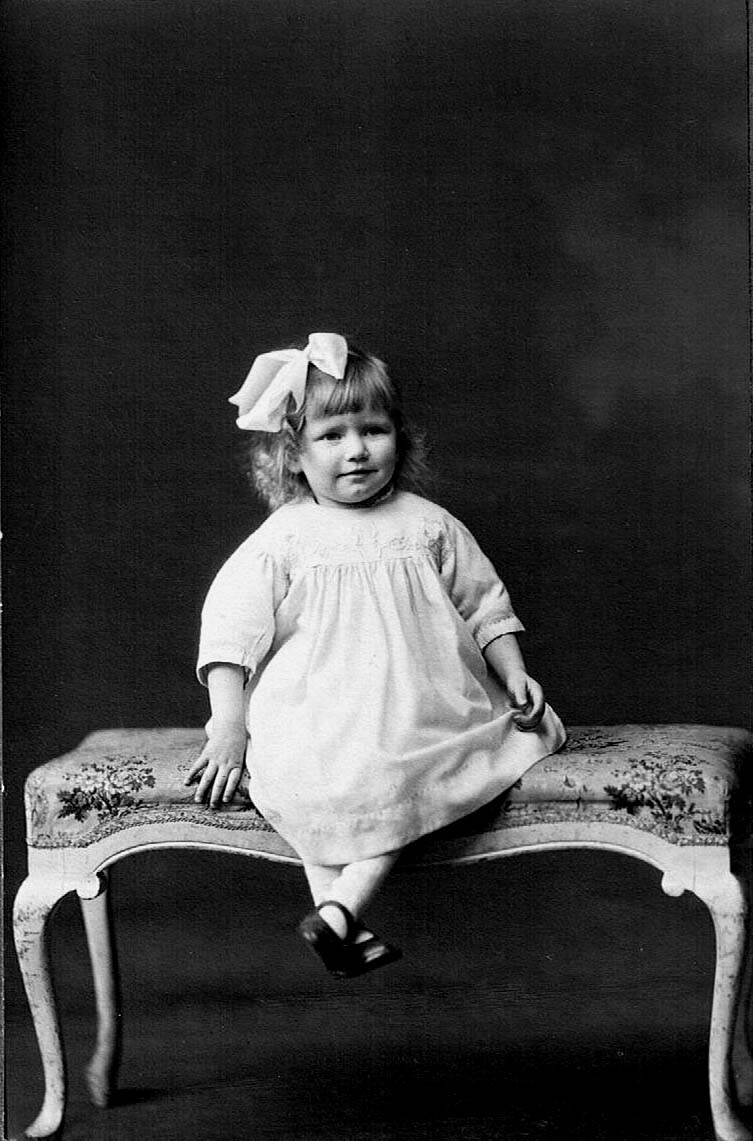
Heredity

I am the family face;
Flesh perishes, I live on,
Projecting trait and trace
Through time to times anon,
And leaping from place to place
Over oblivion.

The years-heired feature that can
In curve and voice and eye
Despise the human span
Of durance--that is I;
The eternal thing in man,
That heeds no call to die.