Between us now and here -
Two thrown together
Who are not wont to wear
Life's flushest feather -
Who see the scenes slide past,
The daytimes dimming fast,
Let there be truth at last,
Even if despair.
So thoroughly and long
Have you now known me,
So real in faith and strong
Have I now shown me,
That nothing needs disguise
Further in any wise,
Or asks or justifies
A guarded tongue.
Face unto face, then, say,
Eyes mine own meeting,
Is your heart far away,
Or with mine beating?
When false things are brought low,
And swift things have grown slow,
Feigning like froth shall go,
Faith be for aye.


A Wet Night
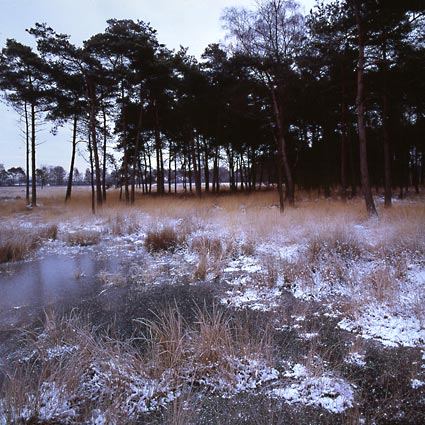
I pace along, the rain-shafts riddling me,
Mile after mile out by the moorland way,
And up the hill, and through the ewe-leaze gray
Into the lane, and round the corner tree;
Where, as my clothing clams me, mire-bestarred,
And the enfeebled light dies out of day,
Leaving the liquid shades to reign, I say,
"This is a hardship to be calendared!"
Yet sires of mine now perished and forgot,
When worse beset, ere roads were shapen here,
And night and storm were foes indeed to fear,
Times numberless have trudged across this spot
In sturdy muteness on their strenuous lot,
And taking all such toils as trifles mere.

Weathers
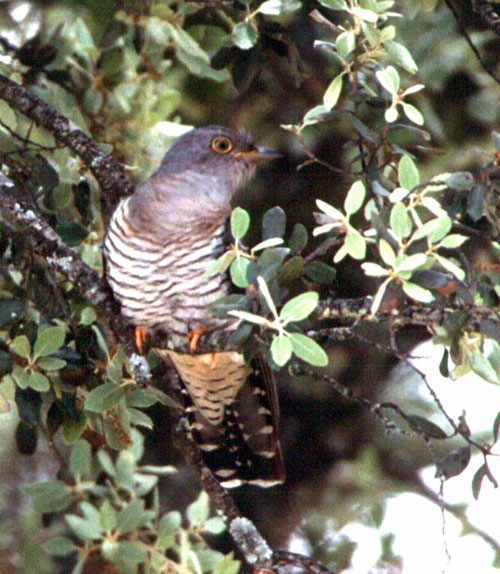
This is the weather the cuckoo likes,
And so do I;
When showers betumble the chestnut spikes,
And nestlings fly:
And the little brown nightingale bills his best,
And they sit outside at "The Travellers' Rest,"
And maids come forth sprig-muslin drest,
And citizens dream of the south and west,
And so do I.
II
This is the weather the shepherd shuns,
And so do I;
When beeches drip in browns and duns,
And thresh, and ply;
And hill-hid tides throb, throe on throe,
And meadow rivulets overflow,
And drops on gate-bars hang in a row,
And rooks in families homeward go,
And so do I.
The Riddle
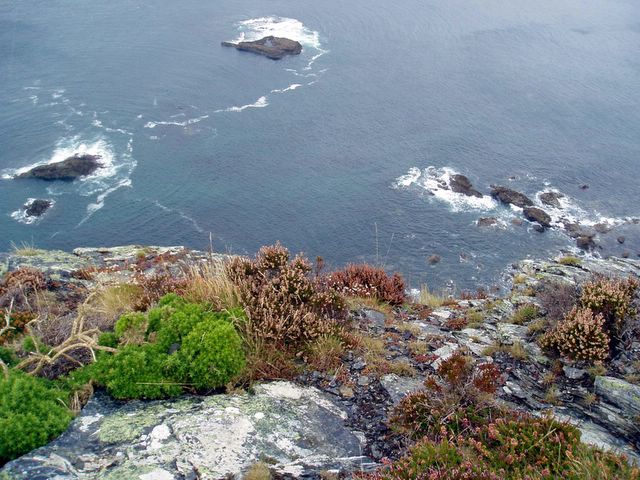
[The Beeny Sisters]
I
Stretching eyes west
Over the sea,
Wind foul or fair,
Always stood she
Prospect-impressed;
Solely out there
Did her gaze rest,
Never elsewhere
Seemed charm to be.
II
Always eyes east
Ponders she now -
As in devotion -
Hills of blank brow
Where no waves plough.
Never the least
Room for emotion
Drawn from the ocean
Does she allow.
A Confession to a Friend in Trouble
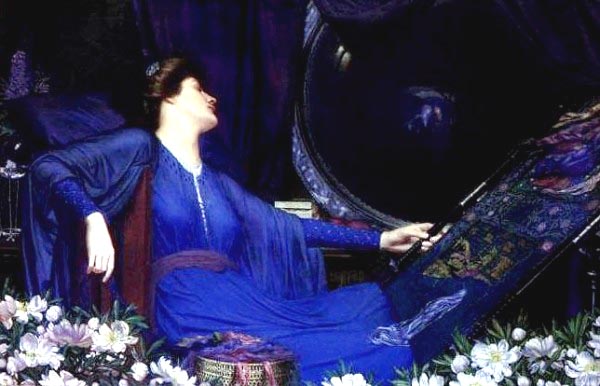
Your troubles shrink not, though I feel them less
Here, far away, than when I tarried near;
I even smile old smiles--with listlessness -
Yet smiles they are, not ghastly mockeries mere.
A thought too strange to house within my brain
Haunting its outer precincts I discern:
- That I will not show zeal again to learn
Your griefs, and sharing them, renew my pain . . .
It goes, like murky bird or buccaneer
That shapes its lawless figure on the main,
And each new impulse tends to make outflee
The unseemly instinct that had lodgment here;
Yet, comrade old, can bitterer knowledge be
Than that, though banned, such instinct was in me!
1866.
The West-of-Wessex girl

(Plymouth Hoe at the turn of the 20th century)
A very West-of-Wessex girl,
As blithe as blithe could be,
Was once well-known to me,
And she would laud her native town,
And hope and hope that we
Might sometime study up and down
Its charms in company.
But never I squired my Wessex girl
In jaunts to Hoe or street
When hearts were high in beat,
Nor saw her in the marbled ways
Where market-people meet
That in her bounding early days
Were friendly with her feet.
Yet now my West-of-Wessex girl,
When midnight hammers slow
From Andrew's, blow by blow,
As phantom draws me by the hand
To the place--Plymouth Hoe--
Where side by side in life, as planned,
We never were to go!
Begun in Plymouth, March 1913.
Tess's Lament
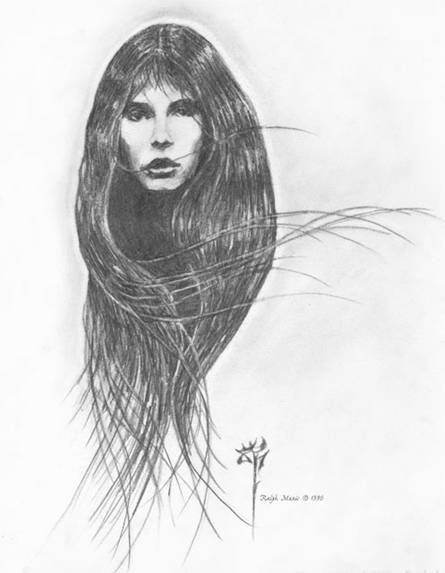
V
How gay we looked that day we wed,
That day we wed!
"May joy be with ye!" all o'm said
A standing by the durn.
I wonder what they say o's now,
And if they know my lot; and how
She feels who milks my favourite cow,
And takes my place at churn!
VI
It wears me out to think of it,
To think of it;
I cannot bear my fate as writ,
I'd have my life unbe;
Would turn my memory to a blot,
Make every relic of me rot,
My doings be as they were not,
And what they've brought to me!
(end)
Tess's Lament

III
And now he's gone; and now he's gone; . . .
And now he's gone!
The flowers we potted p'rhaps are thrown
To rot upon the farm.
And where we had our supper-fire
May now grow nettle, dock, and briar,
And all the place be mould and mire
So cozy once and warm.
IV
And it was I who did it all,
Who did it all;
'Twas I who made the blow to fall
On him who thought no guile.
Well, it is finished--past, and he
Has left me to my misery,
And I must take my Cross on me
For wronging him awhile.
(tbc)
Tess's Lament
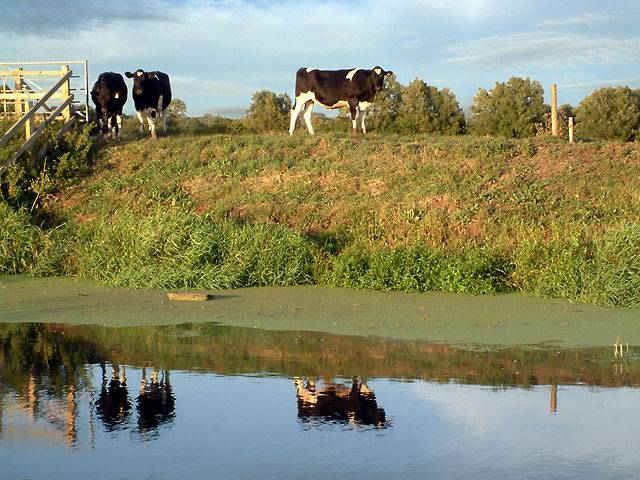
I
I would that folk forgot me quite,
Forgot me quite!
I would that I could shrink from sight,
And no more see the sun.
Would it were time to say farewell,
To claim my nook, to need my knell,
Time for them all to stand and tell
Of my day's work as done.
II
Ah! dairy where I lived so long,
I lived so long;
Where I would rise up stanch and strong,
And lie down hopefully.
'Twas there within the chimney-seat
He watched me to the clock's slow beat -
Loved me, and learnt to call me sweet,
And whispered words to me.
In a Wood
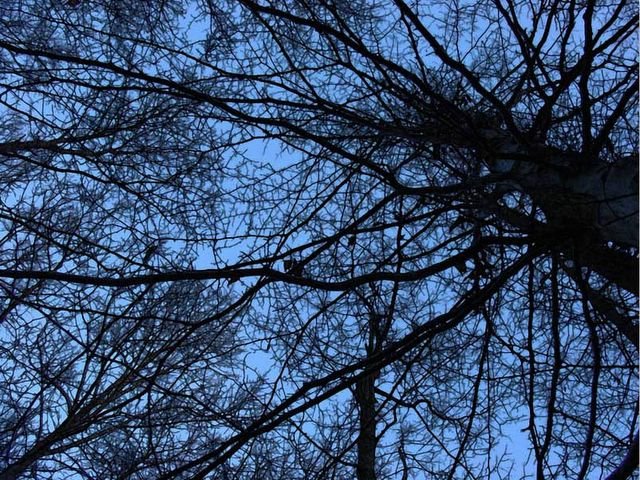
See "THE WOODLANDERS"
Pale beech and pine-tree blue,
Set in one clay,
Bough to bough cannot you
Bide out your day?
When the rains skim and skip,
Why mar sweet comradeship,
Blighting with poison-drip
Neighbourly spray?
Heart-halt and spirit-lame,
City-opprest,
Unto this wood I came
As to a nest;
Dreaming that sylvan peace
Offered the harrowed ease--
Nature a soft release
From men's unrest.
But, having entered in,
Great growths and small
Show them to men akin -
Combatants all!
Sycamore shoulders oak,
Bines the slim sapling yoke,
Ivy-spun halters choke
Elms stout and tall.
Touches from ash, O wych,
Sting you like scorn!
You, too, brave hollies, twitch
Sidelong from thorn.
Even the rank poplars bear
Illy a rival's air,
Cankering in black despair
If overborne.
Since, then, no grace I find
Taught me of trees,
Turn I back to my kind,
Worthy as these.
There at least smiles abound,
There discourse trills around,
There, now and then, are found
Life-loyalties.
1887: 1896.
Paths of Former Time
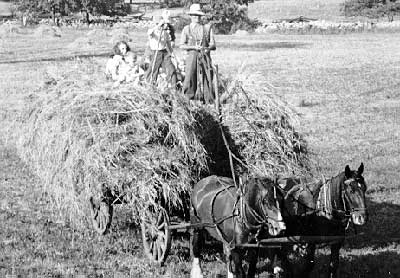
No; no;
It must not be so:
They are the ways we do not go.
Still chew
The kine, and moo
In the meadows we used to wander through;
Still purl
The rivulets and curl
Towards the weirs with a musical swirl;
Haymakers
As in former years
Rake rolls into heaps that the pitchfork rears;
Wheels crack
On the turfy track
The waggon pursues with its toppling pack.
"Why then shun -
Since summer's not done -
All this because of the lack of one?"
Had you been
Sharer of that scene
You would not ask while it bites in keen
1913.
I Sometimes Think (For F. E. H.)
I sometimes think as here I sit
Of things I have done,
Which seemed in doing not unfit
To face the sun:
Yet never a soul has paused a whit
On such - not one.
There was that eager strenuous press
To sow good seed;
There was that saving from distress
In the nick of need;
There were those words in the wilderness:
Who cared to heed?
Yet can this be full true, or no?
For one did care,
And, spiriting into my house, to, fro,
Like wind on the stair,
Cares still, heeds all, and will, even though
I may despair.
The Discovery

I wandered to a crude coast
Like a ghost;
Upon the hills I saw fires -
Funeral pyres
Seemingly--and heard breaking
Waves like distant cannonades that set the land shaking.
And so I never once guessed
A Love-nest,
Bowered and candle-lit, lay
In my way,
Till I found a hid hollow,
Where I burst on her my heart could not but follow.
More Love Lyrics

1967
In five-score summers! All new eyes,
New minds, new modes, new fools, new wise;
New woes to weep, new joys to prize;
With nothing left of me and you
In that live century's vivid view
Beyond a pinch of dust or two;
A century which, if not sublime,
Will show, I doubt not, at its prime,
A scope above this blinkered time.
- Yet what to me how far above?
For I would only ask thereof
That thy worm should be my worm, Love!
16 WESTBOURNE PARK VILLAS, 1867.
At a Lunar Eclipse

Thy shadow, Earth, from Pole to Central Sea,
Now steals along upon the Moon's meek shine
In even monochrome and curving line
Of imperturbable serenity.
How shall I link such sun-cast symmetry
With the torn troubled form I know as thine,
That profile, placid as a brow divine,
With continents of moil and misery?
And can immense Mortality but throw
So small a shade, and Heaven's high human scheme
Be hemmed within the coasts yon arc implies?
Is such the stellar gauge of earthly show,
Nation at war with nation, brains that teem,
Heroes, and women fairer than the skies?
As 'twere to-night (Song)

As 'twere to-night, in the brief space
Of a far eventime,
My spirit rang achime
At vision of a girl of grace;
As 'twere to-night, in the brief space
Of a far eventime.
As 'twere at noontide of to-morrow
I airily walked and talked,
And wondered as I walked
What it could mean, this soar from sorrow;
As 'twere at noontide of to-morrow
I airily walked and talked.
As 'twere at waning of this week
Broke a new life on me;
Trancings of bliss to be
In some dim dear land soon to seek;
As 'twere at waning of this week
Broke a new life on me!
It never looks like Summer

"It never looks like summer here
On Beeny by the sea."
But though she saw its look as drear,
Summer it seemed to me.
It never looks like summer now
Whatever weather's there;
But ah, it cannot anyhow,
On Beeny or elsewhere!
BOSCASTLE,
March 8, 1913.
The Difference

I
Sinking down by the gate I discern the thin moon,
And a blackbird tries over old airs in the pine,
But the moon is a sorry one, sad the bird's tune,
For this spot is unknown to that Heartmate of mine.
II
Did my Heartmate but haunt here at times such as now,
The song would be joyous and cheerful the moon;
But she will see never this gate, path, or bough,
Nor I find a joy in the scene or the tune.
A confession to a friend in trouble

Your troubles shrink not, though I feel them less
Here, far away, than when I tarried near;
I even smile old smiles--with listlessness -
Yet smiles they are, not ghastly mockeries mere.
A thought too strange to house within my brain
Haunting its outer precincts I discern:
- That I will not show zeal again to learn
Your griefs, and sharing them, renew my pain . . .
It goes, like murky bird or buccaneer
That shapes its lawless figure on the main,
And each new impulse tends to make outflee
The unseemly instinct that had lodgment here;
Yet, comrade old, can bitterer knowledge be
Than that, though banned, such instinct was in me!
1866.
The Dear

I plodded to Fairmile Hill-top, where
A maiden one fain would guard
From every hazard and every care
Advanced on the roadside sward.
I wondered how succeeding suns
Would shape her wayfarings,
And wished some Power might take such ones
Under Its warding wings.
The busy breeze came up the hill
And smartened her cheek to red,
And frizzled her hair to a haze. With a will
"Good-morning, my Dear!" I said.
She glanced from me to the far-off gray,
And, with proud severity,
"Good-morning to you--though I may say
I am not YOUR Dear," quoth she:
"For I am the Dear of one not here -
One far from his native land!" -
And she passed me by; and I did not try
To make her understand.
1901
Subscribe to:
Posts (Atom)