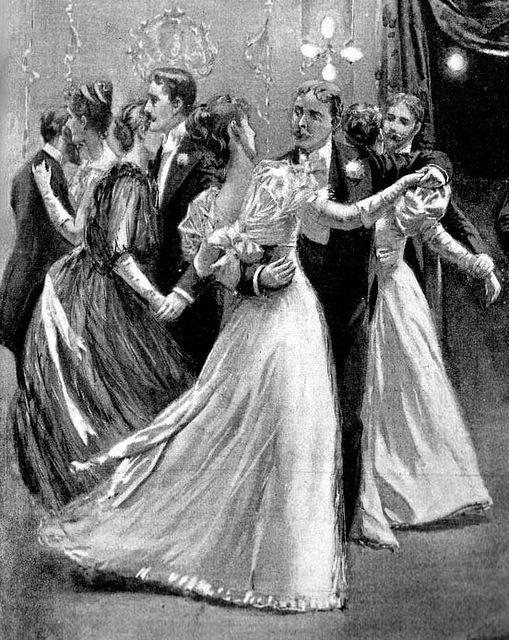
My spirit will not haunt the mound
Above my breast,
But travel, memory-possessed,
To where my tremulous being found
Life largest, best.
My phantom-footed shape will go
When nightfall grays
Hither and thither along the ways
I and another used to know
In backward days.
And there you'll find me, if a jot
You still should care
For me, and for my curious air;
If otherwise, then I shall not,
For you, be there.
Hardy's works take place in Wessex (named after the Anglo-Saxon kingdom which existed in the area). One of his distinctive achievements is to have captured the cultural atmosphere of rural Wessex in the golden epoch that existed just before the coming of the railways and the agricultural and industrial revolutions that were to change the English countryside for ever. His works are often deeply pessimistic and full of bitter irony, in sharp contrast to the prevalent Victorian optimism.
My Spirit Will Not Haunt The Mound
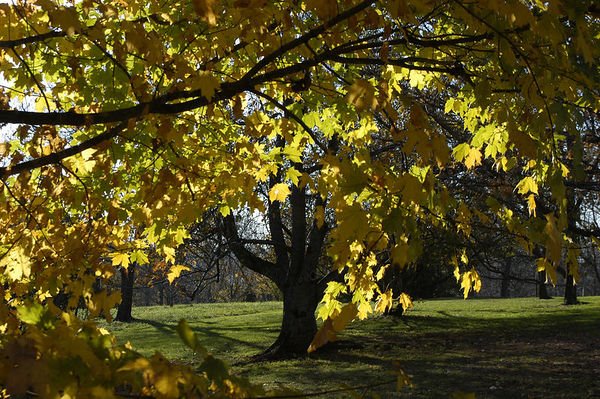
Autumn in King's Hintock Park
Here by the baring bough
Raking up leaves,
Often I ponder how
Springtime deceives, -
I, an old woman now,
Raking up leaves.
Here in the avenue
Raking up leaves,
Lords' ladies pass in view,
Until one heaves
Sighs at life's russet hue,
Raking up leaves!
Just as my shape you see
Raking up leaves,
I saw, when fresh and free,
Those memory weaves
Into grey ghosts by me,
Raking up leaves.
Yet, Dear, though one may sigh,
Raking up leaves,
New leaves will dance on high -
Earth never grieves! -
Will not, when missed am I
Raking up leaves.
1901.
He Prefers Her Earthly
This after-sunset is a sight for seeing,
Cliff-heads of craggy cloud surrounding it.
--And dwell you in that glory-show?
You may; for there are strange strange things in being,
Stranger than I know.
Yet if that chasm of splendour claim your presence
Which glows between the ash cloud and the dun,
How changed must be your mortal mould!
Changed to a firmament-riding earthless essence
From what you were of old:
All too unlike the fond and fragile creature
Then known to me ... Well, shall I say it plain?
I would not have you thus and there,
But still would grieve on, missing you, still feature
You as the one you were.
To Lizbie Browne (excerpt)

I
Dear Lizbie Browne,
Where are you now?
In sun, in rain? -
Or is your brow
Past joy, past pain,
Dear Lizbie Browne?
II
Sweet Lizbie Browne
How you could smile,
How you could sing! -
How archly wile
In glance-giving,
Sweet Lizbie Browne!
III
And, Lizbie Browne,
Who else had hair
Bay-red as yours,
Or flesh so fair
Bred out of doors,
Sweet Lizbie Browne?
The Homecoming (excerpt)

Now sit ye by the fire, poppet; put yourself at ease:
And keep your little thumb out of your mouth, dear, please!
And I'll sing to 'ee a pretty song of lovely flowers and bees,
And happy lovers taking walks within a grove o' trees.
Now, don't ye gnaw your handkercher; 'twill hurt your little tongue,
And if you do feel spitish, 'tis because ye are over young;
But you'll be getting older, like us all, ere very long,
And you'll see me as I am--a man who never did 'ee wrong."
The Selfsame Song

(Image: 'Summer Parish' - Carry Akroyd)
A bird bills the selfsame song,
With never a fault in its flow,
That we listened to here those long
Long years ago.
A pleasing marvel is how
A strain of such rapturous rote
Should have gone on thus till now
Unchanged in a note!
- But it's not the selfsame bird. -
No: perished to dust is he . . .
As also are those who heard
That song with me.
A Night in November
I marked when the weather changed,
And the panes began to quake,
And the winds rose up and ranged,
That night, lying half-awake.
Dead leaves blew into my room,
And alighted upon my bed,
And a tree declared to the gloom
Its sorrow that they were shed.
One leaf of them touched my hand,
And I thought that it was you
There stood as you used to stand,
And saying at last you knew!
(?) 1913.
Welcome Home

To my native place
Bent upon returning,
Bosom all day burning
To be where my race
Well were known, 'twas much with me
There to dwell in amity.
Folk had sought their beds,
But I hailed: to view me
Under the moon, out to me
Several pushed their heads,
And to each I told my name,
Plans, and that therefrom I came.
"Did you? . . . Ah, 'tis true
I once heard, back a long time,
Here had spent his young time,
Some such man as you . . .
Good-night." The casement closed again,
And I was left in the frosty lane.
The Darkling Thrush

I leant upon a coppice gate
When Frost was spectre-gray,
And Winter's dregs made desolate
The weakening eye of day.
The tangled bine-stems scored the sky
Like strings from broken lyres,
And all mankind that haunted nigh
Had sought their household fires.
The land's sharp features seemed to be
The Century's corpse outleant,
His crypt the cloudy canopy,
The wind his death-lament.
The ancient pulse of germ and birth
Was shrunken hard and dry,
And every spirit upon earth
Seemed fervourless as I.
At once a voice outburst among
The bleak twigs overhead
In a full-hearted evensong
Of joy illimited;
An aged thrush, frail, gaunt, and small,
In blast-beruffled plume,
Had chosen thus to fling his soul
Upon the growing gloom.
So little cause for carollings
Of such ecstatic sound
Was written on terrestrial things
Afar or nigh around,
That I could think there trembled through
His happy good-night air
Some blessed Hope, whereof he knew
And I was unaware.
December 1900.
Apostrophe to an Old Psalm Tune

I met you first--ah, when did I first meet you?
When I was full of wonder, and innocent,
Standing meek-eyed with those of choric bent,
While dimming day grew dimmer
In the pulpit-glimmer.
Much riper in years I met you--in a temple
Where summer sunset streamed upon our shapes,
And you spread over me like a gauze that drapes,
And flapped from floor to rafters,
Sweet as angels' laughters.
But you had been stripped of some of your old vesture
By Monk, or another. Now you wore no frill,
And at first you startled me. But I knew you still,
Though I missed the minim's waver,
And the dotted quaver.
I grew accustomed to you thus. And you hailed me
Through one who evoked you often. Then at last
Your raiser was borne off, and I mourned you had passed
From my life with your late outsetter;
Till I said, "'Tis better!"
But you waylaid me. I rose and went as a ghost goes,
And said, eyes-full "I'll never hear it again!
It is overmuch for scathed and memoried men
When sitting among strange people
Under their steeple."
Now, a new stirrer of tones calls you up before me
And wakes your speech, as she of Endor did
(When sought by Saul who, in disguises hid,
Fell down on the earth to hear it)
Samuel's spirit.
So, your quired oracles beat till they make me tremble
As I discern your mien in the old attire,
Here in these turmoiled years of belligerent fire
Living still on--and onward, maybe,
Till Doom's great day be!
Sunday, August 13, 1916.
Her Confession

As some bland soul, to whom a debtor says
"I'll now repay the amount I owe to you,"
In inward gladness feigns forgetfulness
That such a payment ever was his due
(His long thought notwithstanding), so did I
At our last meeting waive your proffered kiss
With quick divergent talk of scenery nigh,
By such suspension to enhance my bliss.
And as his looks in consternation fall
When, gathering that the debt is lightly deemed,
The debtor makes as not to pay at all,
So faltered I, when your intention seemed
Converted by my false uneagerness
To putting off for ever the caress.
W. P. V., 1865-67.
The Stranger's Song

(As sung by MR. CHARLES CHARRINGTON in the play of "The Three Wayfarers")
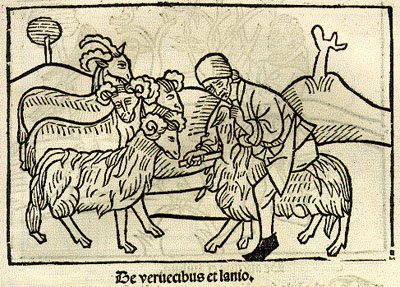
O my trade it is the rarest one,
Simple shepherds all -
My trade is a sight to see;
For my customers I tie, and take 'em up on high,
And waft 'em to a far countree!
My tools are but common ones,
Simple shepherds all -
My tools are no sight to see:
A little hempen string, and a post whereon to swing,
Are implements enough for me!
To-morrow is my working day,
Simple shepherds all -
To-morrow is a working day for me:
For the farmer's sheep is slain, and the lad who did it ta'en,
And on his soul may God ha' mer-cy!
On a Fine Morning

I
Whence comes Solace?--Not from seeing
What is doing, suffering, being,
Not from noting Life's conditions,
Nor from heeding Time's monitions;
But in cleaving to the Dream,
And in gazing at the gleam
Whereby gray things golden seem.
II
Thus do I this heyday, holding
Shadows but as lights unfolding,
As no specious show this moment
With its irised embowment;
But as nothing other than
Part of a benignant plan;
Proof that earth was made for man.
February 1899.
An Autumn Rain-Scene

There trudges one to a merry-making
With a sturdy swing,
On whom the rain comes down.
To fetch the saving medicament
Is another bent,
On whom the rain comes down.
One slowly drives his herd to the stall
Ere ill befall,
On whom the rain comes down.
This bears his missives of life and death
With quickening breath,
On whom the rain comes down.
One watches for signals of wreck or war
From the hill afar,
On whom the rain comes down.
No care if he gain a shelter or none,
Unhired moves one,
On whom the rain comes down.
And another knows nought of its chilling fall
Upon him at all,
On whom the rain comes down.
October 1904.
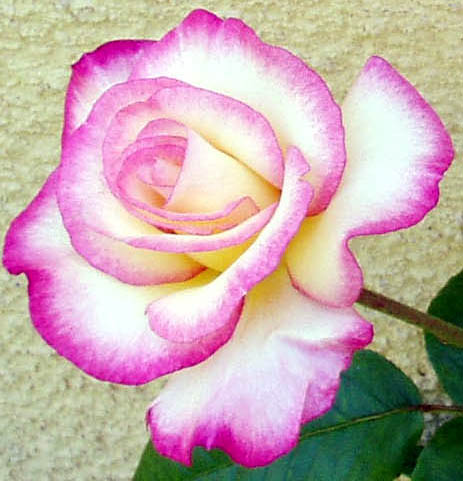
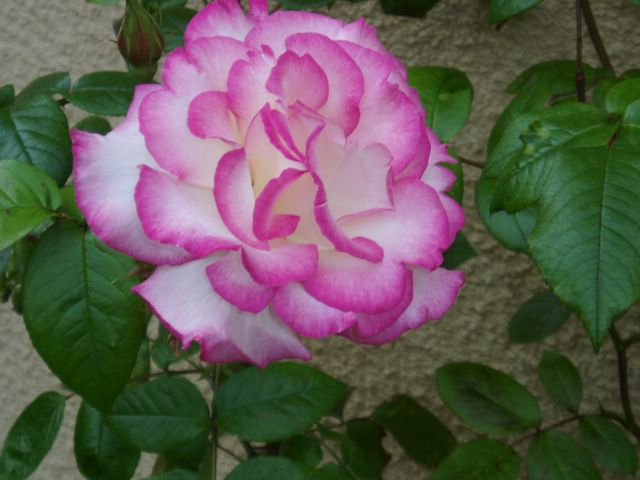
The Spell of the Rose (II)

"I'll mend these miseries," then said I,
And so, at dead of night,
I went and, screened from sight,
That nought should keep our souls in severance,
I set a rose-bush. "This," said I,
"May end divisions dire and wry,
And long-drawn days of blight."
But I was called from earth--yea, called
Before my rose-bush grew;
And would that now I knew
What feels he of the tree I planted,
And whether, after I was called
To be a ghost, he, as of old,
Gave me his heart anew!
Perhaps now blooms that queen of trees
I set but saw not grow,
And he, beside its glow -
Eyes couched of the mis-vision that blurred me -
Ay, there beside that queen of trees
He sees me as I was, though sees
Too late to tell me so!
The Spell of the Rose (I)

"I mean to build a hall anon,
And shape two turrets there,
And a broad newelled stair,
And a cool well for crystal water;
Yes; I will build a hall anon,
Plant roses love shall feed upon,
And apple trees and pear."
He set to build the manor-hall,
And shaped the turrets there,
And the broad newelled stair,
And the cool well for crystal water;
He built for me that manor-hall,
And planted many trees withal,
But no rose anywhere.
And as he planted never a rose
That bears the flower of love,
Though other flowers throve
A frost-wind moved our souls to sever
Since he had planted never a rose;
And misconceits raised horrid shows,
And agonies came thereof.
(tbc)