Great Things (I)


Sweet cyder is a great thing,
A great thing to me,
Spinning down to Weymouth town
By Ridgway thirstily,
And maid and mistress summoning
Who tend the hostelry:
O cyder is a great thing,
A great thing to me!
 Posted by Picasa

Postponement


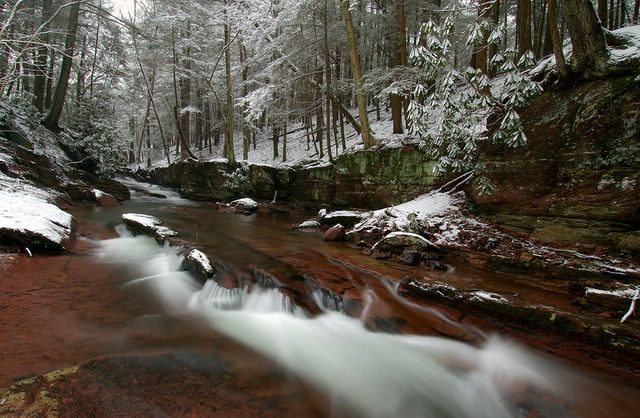
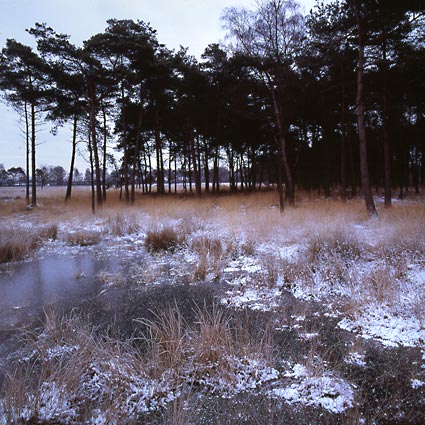
Snow-bound in woodland, a mournful word,
Dropt now and then from the bill of a bird,
Reached me on wind-wafts; and thus I heard,
Wearily waiting:-

"I planned her a nest in a leafless tree,
But the passers eyed and twitted me,
And said: 'How reckless a bird is he,
Cheerily mating!'

"Fear-filled, I stayed me till summer-tide,
In lewth of leaves to throne her bride;
But alas! her love for me waned and died,
Wearily waiting.

"Ah, had I been like some I see,
Born to an evergreen nesting-tree,
None had eyed and twitted me,
Cheerily mating!"

1866.
 Posted by Picasa

The Difference


I

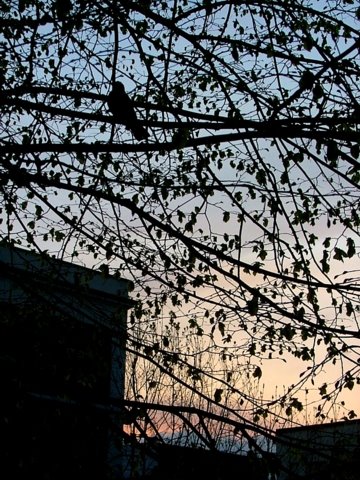
Sinking down by the gate I discern the thin moon,
And a blackbird tries over old airs in the pine,
But the moon is a sorry one, sad the bird's tune,
For this spot is unknown to that Heartmate of mine.

II

Did my Heartmate but haunt here at times such as now,
The song would be joyous and cheerful the moon;
But she will see never this gate, path, or bough,
Nor I find a joy in the scene or the tune.
 Posted by Picasa

Before Knowledge (excerpt)


When I walked roseless tracks and wide,
Ere dawned your date for meeting me,
O why did you not cry Halloo
Across the stretch between, and say:

"We move, while years as yet divide,
On closing lines which--though it be
You know me not nor I know you -
Will intersect and join some day!"
 Posted by Picasa

On a Fine Morning


Whence comes Solace? - Not from seeing
What is doing, suffering, being,
Not from noting Life's conditions,
Nor from heeding Time's monitions;
But in cleaving to the Dream,
And in gazing at the gleam
Whereby gray things golden seem.

II

Thus do I this heyday, holding
Shadows but as lights unfolding,
As no specious show this moment
With its irised embowment;
But as nothing other than
Part of a benignant plan;
Proof that earth was made for man.

February 1899.
 Posted by Picasa

The Respectable Burgher on "The Higher Criticism"


Since Reverend Doctors now declare
That clerks and people must prepare
To doubt if Adam ever were;
To hold the flood a local scare;
To argue, though the stolid stare,
That everything had happened ere
The prophets to its happening sware;
That David was no giant-slayer,
Nor one to call a God-obeyer
In certain details we could spare,
But rather was a debonair
Shrewd bandit, skilled as banjo-player:
That Solomon sang the fleshly Fair,
And gave the Church no thought whate'er;
That Esther with her royal wear,
And Mordecai, the son of Jair,
And Joshua's triumphs, Job's despair,
And Balaam's ass's bitter blare;
Nebuchadnezzar's furnace-flare,
And Daniel and the den affair,
And other stories rich and rare,
Were writ to make old doctrine wear
Something of a romantic air:
That the Nain widow's only heir,
And Lazarus with cadaverous glare
(As done in oils by Piombo's care)
Did not return from Sheol's lair:
That Jael set a fiendish snare,
That Pontius Pilate acted square,
That never a sword cut Malchus' ear
And (but for shame I must forbear)
That - - - - - did not reappear! ...
- Since thus they hint, nor turn a hair,
All churchgoing will I forswear,
And sit on Sundays in my chair,
And read that moderate man Voltaire.

Comment
Although the questions of 'higher criticism' (now called historical criticism) are widely recognized by Orthodox Jews and many Christians as legitimate questions, they often find the answers given by the radical higher critics completely unsatisfactory or even heretical.

In particular, Evangelical Christians object to the rationalistic and naturalistic presuppositions of a large number of practioneers of higher criticism that leads to conclusions that the orthodox find unacceptable.

Most 'higher critcism' has now been discredited as a result of its own presuppositions.

(RR)

 Posted by Picasa

Shut out that Moon


Close up the casement, draw the blind,
Shut out that stealing moon,
She wears too much the guise she wore
Before our lutes were strewn
With years-deep dust, and names we read
On a white stone were hewn.

Step not out on the dew-dashed lawn
To view the Lady's Chair,
Immense Orion's glittering form,
The Less and Greater Bear:
Stay in; to such sights we were drawn
When faded ones were fair.

Brush not the bough for midnight scents
That come forth lingeringly,
And wake the same sweet sentiments
They breathed to you and me
When living seemed a laugh, and love
All it was said to be.

Within the common lamp-lit room
Prison my eyes and thought;
Let dingy details crudely loom,
Mechanic speech be wrought:
Too fragrant was Life's early bloom,
Too tart the fruit it brought!

1904.
 Posted by Picasa

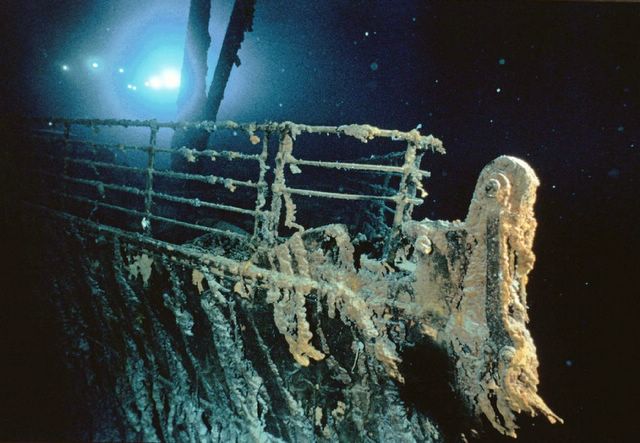
The Convergence of the Twain


(Lines on the loss of the "Titanic")

I

In a solitude of the sea
Deep from human vanity,
And the Pride of Life that planned her, stilly couches she.

II

Steel chambers, late the pyres
Of her salamandrine fires,
Cold currents thrid, and turn to rhythmic tidal lyres.

III

Over the mirrors meant
To glass the opulent
The sea-worm crawls--grotesque, slimed, dumb, indifferent.

IV

Jewels in joy designed
To ravish the sensuous mind
Lie lightless, all their sparkles bleared and black and blind.

V

Dim moon-eyed fishes near
Gaze at the gilded gear
And query: "What does this vaingloriousness down here?" . . .

VI

Well: while was fashioning
This creature of cleaving wing,
The Immanent Will that stirs and urges everything

VII

Prepared a sinister mate
For her--so gaily great -
A Shape of Ice, for the time far and dissociate.

VIII

And as the smart ship grew
In stature, grace, and hue,
In shadowy silent distance grew the Iceberg too.

IX

Alien they seemed to be:
No mortal eye could see
The intimate welding of their later history,

X

Or sign that they were bent
By paths coincident
On being anon twin halves of one august event,

XI

Till the Spinner of the Years
Said "Now!" And each one hears,
And consummation comes, and jars two hemispheres.
 Posted by Picasa

The Dolls


"Whenever you dress me dolls, mammy,
Why do you dress them so,
And make them gallant soldiers,
When never a one I know;
And not as gentle ladies
With frills and frocks and curls,
As people dress the dollies
Of other little girls?"

Ah--why did she not answer:-
"Because your mammy's heed
Is always gallant soldiers,
As well may be, indeed.
One of them was your daddy,
His name I must not tell;
He's not the dad who lives here,
But one I love too well."
 Posted by Picasa

Her Song


I sang that song on Sunday,
To witch an idle while,
I sang that song on Monday,
As fittest to beguile;
I sang it as the year outwore,
And the new slid in;
I thought not what might shape before
Another would begin.

I sang that song in summer,
All unforeknowingly,
To him as a new-comer
From regions strange to me:
I sang it when in afteryears
The shades stretched out,
And paths were faint; and flocking fears
Brought cup-eyed care and doubt.

Sings he that song on Sundays
In some dim land afar,
On Saturdays, or Mondays,
As when the evening star
Glimpsed in upon his bending face
And my hanging hair,
And time untouched me with a trace
Of soul-smart or despair?
 Posted by Picasa

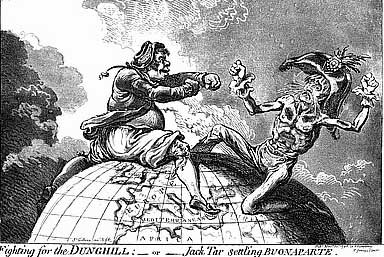
The Sergeant's Song (1803)


When Lawyers strive to heal a breach,
And Parsons practise what they preach;
Then Little Boney he'll pounce down,
And march his men on London town!
Rollicum-rorum, tol-lol-lorum,
Rollicum-rorum, tol-lol-lay!

When Justices hold equal scales,
And Rogues are only found in jails;
Then Little Boney he'll pounce down,
And march his men on London town!
Rollicum-rorum, &c.

When Rich Men find their wealth a curse,
And fill therewith the Poor Man's purse;
Then Little Boney he'll pounce down,
And march his men on London town!
Rollicum-rorum, &c.

When Husbands with their Wives agree,
And Maids won't wed from modesty;
Then Little Boney he'll pounce down,
And march his men on London town!
Rollicum-rorum, tol-tol-lorum,
Rollicum-rorum, tol-lol-lay!

1878.

Published in "The Trumpet-Major," 1880.
 Posted by Picasa

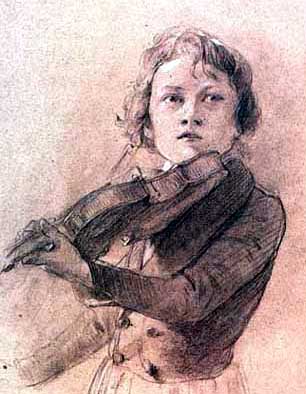
At the Railway Station, Upway


"There is not much that I can do,
For I've no money that's quite my own!"
Spoke up the pitying child -
A little boy with a violin
At the station before the train came in, -
"But I can play my fiddle to you,
And a nice one 'tis, and good in tone!"

The man in the handcuffs smiled;
The constable looked, and he smiled, too,
As the fiddle began to twang;
And the man in the handcuffs suddenly sang
Uproariously:
"This life so free
Is the thing for me!"
And the constable smiled, and said no word,
As if unconscious of what he heard;
And so they went on till the train came in -
The convict, and boy with the violin.

 Posted by Picasa

Between Us Now

Between us now and here -
Two thrown together
Who are not wont to wear
Life's flushest feather -
Who see the scenes slide past,
The daytimes dimming fast,
Let there be truth at last,
Even if despair.

So thoroughly and long
Have you now known me,
So real in faith and strong
Have I now shown me,
That nothing needs disguise
Further in any wise,
Or asks or justifies
A guarded tongue.

Face unto face, then, say,
Eyes mine own meeting,
Is your heart far away,
Or with mine beating?
When false things are brought low,
And swift things have grown slow,
Feigning like froth shall go,
Faith be for aye.

A Wet Night


I pace along, the rain-shafts riddling me,
Mile after mile out by the moorland way,
And up the hill, and through the ewe-leaze gray
Into the lane, and round the corner tree;

Where, as my clothing clams me, mire-bestarred,
And the enfeebled light dies out of day,
Leaving the liquid shades to reign, I say,
"This is a hardship to be calendared!"

Yet sires of mine now perished and forgot,
When worse beset, ere roads were shapen here,
And night and storm were foes indeed to fear,
Times numberless have trudged across this spot
In sturdy muteness on their strenuous lot,
And taking all such toils as trifles mere.

 Posted by Picasa

Weathers


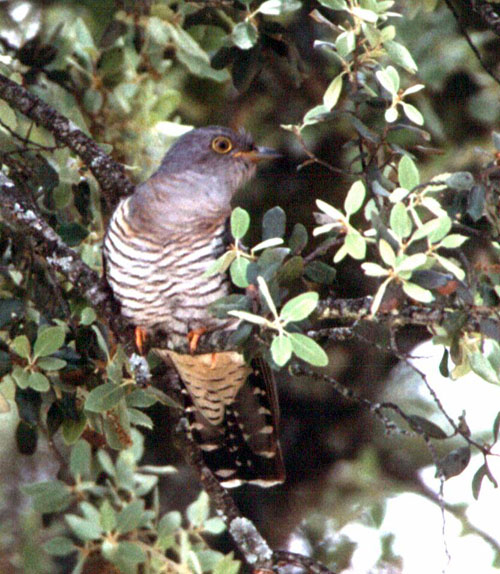
This is the weather the cuckoo likes,
And so do I;
When showers betumble the chestnut spikes,
And nestlings fly:
And the little brown nightingale bills his best,
And they sit outside at "The Travellers' Rest,"
And maids come forth sprig-muslin drest,
And citizens dream of the south and west,
And so do I.

II

This is the weather the shepherd shuns,
And so do I;
When beeches drip in browns and duns,
And thresh, and ply;
And hill-hid tides throb, throe on throe,
And meadow rivulets overflow,
And drops on gate-bars hang in a row,
And rooks in families homeward go,
And so do I.
 Posted by Picasa

The Riddle


[The Beeny Sisters]

I

Stretching eyes west
Over the sea,
Wind foul or fair,
Always stood she
Prospect-impressed;
Solely out there
Did her gaze rest,
Never elsewhere
Seemed charm to be.

II

Always eyes east
Ponders she now -
As in devotion -
Hills of blank brow
Where no waves plough.
Never the least
Room for emotion
Drawn from the ocean
Does she allow.
 Posted by Picasa

A Confession to a Friend in Trouble


Your troubles shrink not, though I feel them less
Here, far away, than when I tarried near;
I even smile old smiles--with listlessness -
Yet smiles they are, not ghastly mockeries mere.

A thought too strange to house within my brain
Haunting its outer precincts I discern:
- That I will not show zeal again to learn
Your griefs, and sharing them, renew my pain . . .

It goes, like murky bird or buccaneer
That shapes its lawless figure on the main,
And each new impulse tends to make outflee
The unseemly instinct that had lodgment here;
Yet, comrade old, can bitterer knowledge be
Than that, though banned, such instinct was in me!

1866.
 Posted by Picasa

The West-of-Wessex girl


(Plymouth Hoe at the turn of the 20th century)

A very West-of-Wessex girl,
As blithe as blithe could be,
Was once well-known to me,
And she would laud her native town,
And hope and hope that we
Might sometime study up and down
Its charms in company.

But never I squired my Wessex girl
In jaunts to Hoe or street
When hearts were high in beat,
Nor saw her in the marbled ways
Where market-people meet
That in her bounding early days
Were friendly with her feet.

Yet now my West-of-Wessex girl,
When midnight hammers slow
From Andrew's, blow by blow,
As phantom draws me by the hand
To the place--Plymouth Hoe--
Where side by side in life, as planned,
We never were to go!

Begun in Plymouth, March 1913.
 Posted by Picasa

Tess's Lament


V

How gay we looked that day we wed,
That day we wed!
"May joy be with ye!" all o'm said
A standing by the durn.
I wonder what they say o's now,
And if they know my lot; and how
She feels who milks my favourite cow,
And takes my place at churn!

VI

It wears me out to think of it,
To think of it;
I cannot bear my fate as writ,
I'd have my life unbe;
Would turn my memory to a blot,
Make every relic of me rot,
My doings be as they were not,
And what they've brought to me!

(end)
 Posted by Picasa

Tess's Lament


III

And now he's gone; and now he's gone; . . .
And now he's gone!
The flowers we potted p'rhaps are thrown
To rot upon the farm.
And where we had our supper-fire
May now grow nettle, dock, and briar,
And all the place be mould and mire
So cozy once and warm.

IV

And it was I who did it all,
Who did it all;
'Twas I who made the blow to fall
On him who thought no guile.
Well, it is finished--past, and he
Has left me to my misery,
And I must take my Cross on me
For wronging him awhile.
(tbc) Posted by Picasa